
Local HVAC companies hoping to earn between 150 and 500 high-intent leads per month rely on search engine optimization (SEO) to appear in front of potential customers searching for terms like ac repair near me or furnace repair + city identifier.
As the founder of HVAC-Plumber SEO Webmasters, I’ve worked with thousands of HVAC companies on SEO campaigns over the past 16+ years. So I have over a decade’s worth of empirical data showing which strategies and techniques drive results and which don’t.
It’s also essential to understand that SEO has evolved drastically, especially over the past 2 years, when the onset of AI and related platforms (Gemini, ChatGPT, etc.) has fundamentally altered the search landscape.
These advancements are in addition to the standard Google Algorithm updates, including the recent December 2025 Core Update that refines search standards and weeds out websites that fail to meet them.
The following guide will assist heating and cooling business owners in their quest to maximize lead generation through SEO in 2026, from the perspective of a long-time agency owner with more than a decade of firsthand experience working directly with HVACR companies on search engine visibility.
Key Takeaway
HVAC SEO can generate 150-500 high-intent leads per month for businesses that implement a comprehensive search engine optimization campaign, including Local SEO, GEO, reputation management, and link building.
Why HVAC Companies Need SEO
HVAC companies that don’t perform SEO are actively gifting their most profitable jobs to nearby competitors.
Some local businesses opt to invest primarily in paid ads (PPC) without realizing this is the equivalent of renting leads, meaning your lead source disappears once you stop paying Google, at a cost of $150 per click.
SEO serves as the antithesis to the paid ads model because it becomes a long-term business asset that grows in value over time. When you start generating $0 clicks that result in qualified leads, it changes the entire trajectory of your business.
Here are some of the primary benefits of a comprehensive HVAC SEO campaign:
- Rank your website and Google Business Profile above competitors
- Acquire organic (free) traffic from search engines and AI
- Generate exclusive and low-cost leads from Google
- Build your brand and reputation online
Example Lead Chart for High-End SEO for HVAC Company in Large Metro
| Lead Source | Projected Monthly Leads | Lead Quality |
|---|---|---|
| Google Maps (3-Pack) | 100-300 | High urgency phone calls, direct user intent |
| Organic Search (Blue Links) | 40-120 | Service-specific, longtail clicks with high intent |
| AI (AIO, Gemini, ChatGPT, etc.) | 10-75 | Growing platforms, brand mentions, long-term impact |
| Total SEO Leads | 150-500+ | Total varies based on seasonality, reviews, and brand signals |
SEO Components for AC Companies
SEO is a loaded acronym that encompasses many aspects of search engine optimization. Everything from XML sitemap submissions to blog post publishing falls under the SEO umbrella.
As a result, HVAC-Plumber SEO Webmasters breaks down SEO components into seven main categories: keywords, content, links, on-page, technical, AI, and local.
Keywords
Keywords are the foundation of SEO because your efforts must target terms and phrases that HVAC consumers search for online. Therefore, neglecting keyword research undermines your broader SEO campaign.
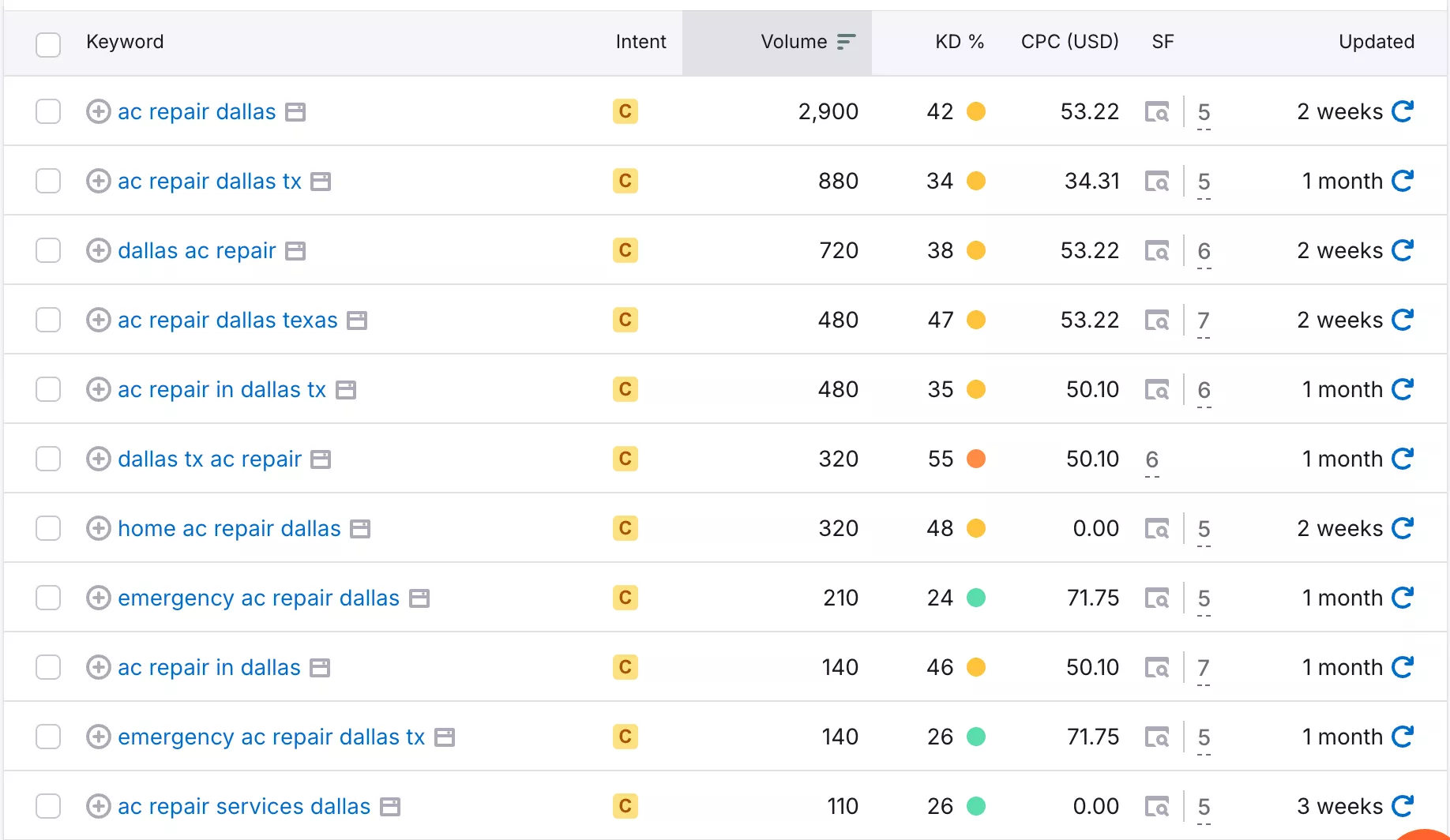
Keyword research tools like Ahrefs, Moz Keyword Explorer, and SEMRush can help you build a list of targeted keywords based on search volume, difficulty, and user intent.
Keyword Volume
Keyword volume is the estimated number of users who search for a query per month. Of course, the metric is not 100% accurate, as no platform can access every query. Still, search volume gives you a general idea about a keyword’s popularity. Keep in mind that local terms will have a lower volume.
Keyword Difficulty
Keyword difficulty measures how hard it is to rank for a given query. For example, the term air conditioner repair has a very high difficulty, but adding a local modifier, like in dallas, lowers the difficulty significantly. As a result, local terms are less affected by the overall population.
User Intent
User intent categorizes queries by the user’s estimated intent. For example, if someone searches for my furnace is blowing cold air, we can define their goal as informational. In contrast, a query like furnace repair near me shows transactional intent. The latter type is most valuable for HVAC websites.
Content
Content is the fuel for your keywords, as high-quality pages and posts allow your website to rank for your targeted phrases. HVAC websites typically publish three types of content: service pages, city pages, and blog posts. Each content type targets an individual keyword.
For example, a service page may target air conditioner repair, a city page may target dallas hvac company, and a blog post may target signs of furnace damage. Each query holds a specific user intent. The content must reflect the user’s needs within the text and visual presentation.
Service Pages
Service pages detail the services your HVAC company offers, such as air conditioner repair, furnace repair, and mini-split AC installation.
Each service page targets a single service, so Google and other search engines can index your pages accordingly. Interlinking service pages provides an SEO boost and helps establish sitewide topical authority.
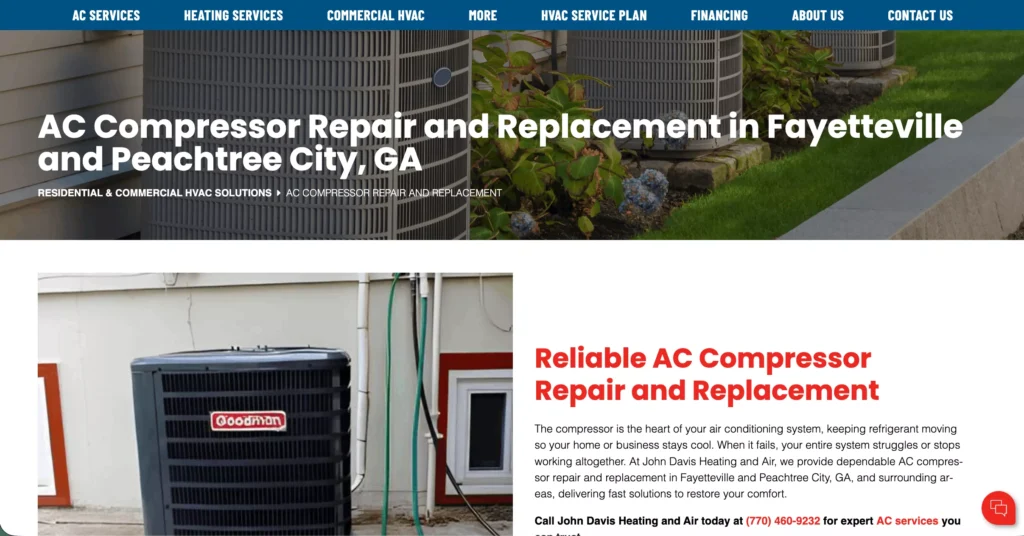
Less noteworthy services, such as AC compressor repair, may get fewer impressions but will also convert at a very high rate when they are clicked. Therefore, you shouldn’t overlook those services when mapping out your pages.
City Pages
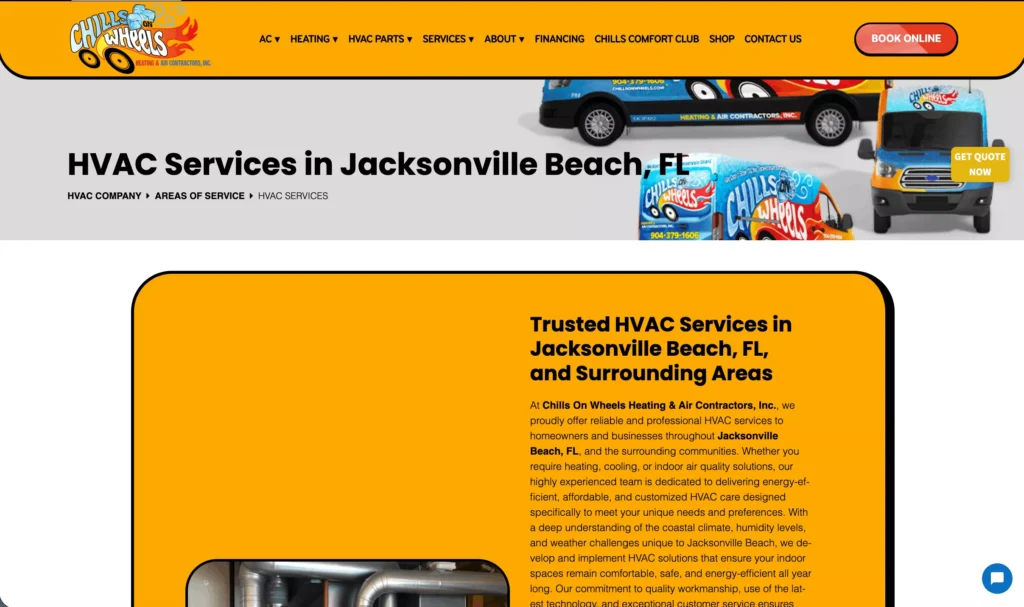
City pages target nearby cities outside of your primary location. For example, if you operate your company in Dallas, TX, you might have city pages for Plano, McKinney, and Frisco. Your homepage targets Dallas, while individual city pages target nearby cities for optimal rankings.
Although city pages can increase search visibility when published with unique, high-quality content, they can also undermine your sitewide trust if they are low-quality, spam-like pages.
I don’t recommend publishing more than 25 city pages on your website and warn HVAC companies against including city pages more than 25 miles from their primary location.
Blog Posts
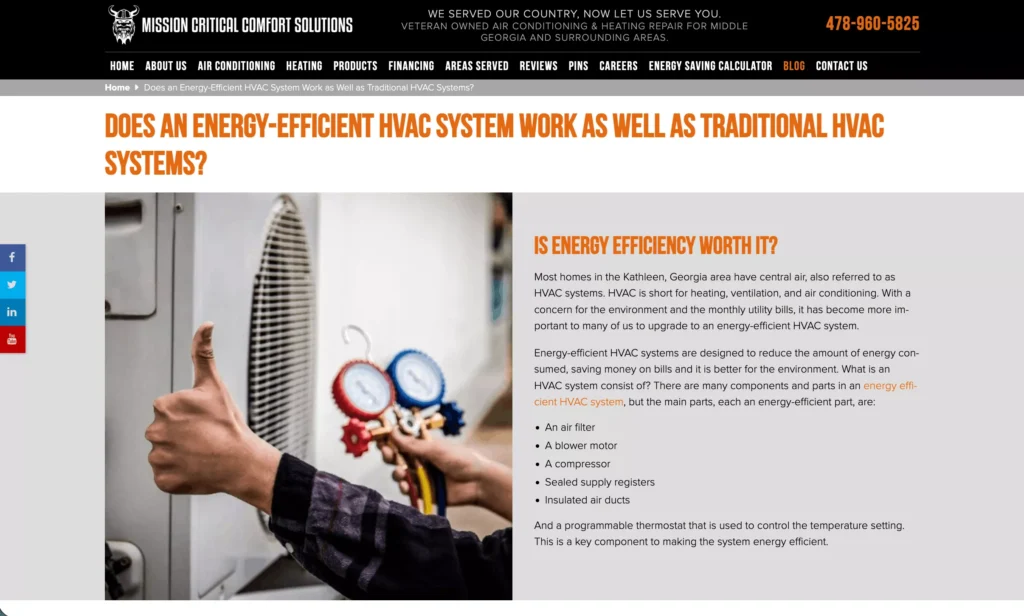
Blog posts target informational queries that wouldn’t make sense on a service or city page. For example, a query like why is my ac vent making noise isn’t something you can target on a service page.
HVAC companies with a dedicated blog can publish an informative blog post for this query type that links to the AC repair service page. However, I recommend not publishing too many blog posts on your site.
Like city pages, blog posts can sometimes hinder your search visibility rather than improve it. Google’s Helpful Content Update specifically targeted thin blog posts that are commonly found on local HVAC websites.
Link Building
Backlinks are an endorsement from one website to another, making them vital to search engine optimization for HVAC contractors.
Although links are one of Google’s most significant ranking factors, they are also one of the most dangerous SEO tasks you can pursue. Black-hat link building (such as paying for links) can result in a manual Google penalty.
White-hat link building involves creating high-quality content assets and sharing them on social media platforms. Other white-hat strategies include submitting your website to local and industry directories and joining HVAC associations within your region.

Natural Links
Natural links are those that websites link to without your input. For example, a blog writer researching various AC repair techniques might come across one of your highest-ranking blog posts.
The writer may reference your post within their article, thus transferring link equity. This link ecosystem is why data-driven posts that include original statistics tend to generate more natural links than generic posts.
Citation Links
Citation links come from platforms like Google Business Profile, Yelp, and HomeAdvisor, which allow you to submit your business information within their directories.
Since anyone can create these citations, the links are tagged with nofollow, making them less potent than natural links.
Institutional Links
Joining industry or local associations, such as the Chamber of Commerce, can earn you a link on the website’s membership page.
These types of institutions often link out to their members, who are typically local businesses like yours. As a result, you can earn valuable link equity.
Press Release Links
If your local business does something newsworthy, such as opening a new office location, a press release can help build links to your website.
Although most press release links are nofollow links, they still validate your website within Google’s index, as long as your press release is legitimate and not misleading.
On-Page SEO
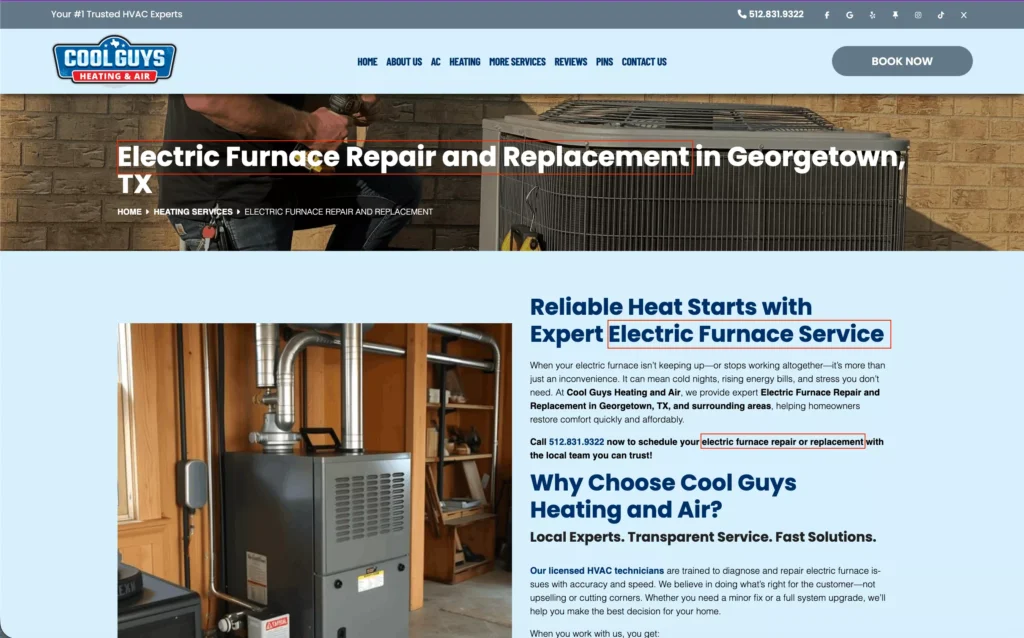
On-Page SEO ensures that Google and other search engine crawlers understand what your content is about.
You can write an outstanding article about furnace damage signs, but if you fail to implement the keyword into the title tag, meta description, and URL, it won’t rank.
In addition to the aforementioned keyword placements, placing your keyword in the first paragraph of your content and two more times throughout the rest of the page or post is ideal.
Be careful not to oversaturate your content with a single keyword. Instead, use semantically-related keywords as synonyms that refer to the same entity in different ways.
Title Tags
Your title tag is what appears on Google search results (unless Google modifies it) and is the easiest way to relay a page or post topic to search engines.
You can use WordPress plugins like Yoast SEO to ensure your title tags fit within the maximum character limit and contain your keyword.
Meta Descriptions
Your meta description appears beneath your title tag on Google search results. Although it’s considered less influential than the title tag, it is still a great place to insert your keyword and give a preview of what your page or post is about.
Like title tags, Yoast helps you optimize your meta descriptions and will ensure you stay within the ideal character limit.
URL Slugs
URL slugs, also known as permalinks, appear in the user’s browser address bar and within your Google Search Console indexing report.
For example, if your company website domain is bigdavehvac.com, your service page URL slug would be bigdaveshvac.com/ac-repair.
Including your primary keyword in your URL slug helps search engines quickly understand the page’s topic and generally helps it rank higher than a non-descriptive slug.
Technical SEO
Ensuring that Google and other search engines can crawl and index your website is critical to SEO. As a result, Technical SEO is one of the most overlooked components for HVAC companies. It’s easy to ignore technical optimization when you lack the knowledge to do it.
Various factors influence your website’s technical optimization, including sitemaps, HTML, URL structure, canonicals, noindex tags, internal links, user experience, and Google Search Console setup.
Hiring a professional is the best way to ensure a technically sound SEO strategy, as it often involves complex problems that cannot be addressed with direct experience alone.
Sitemaps
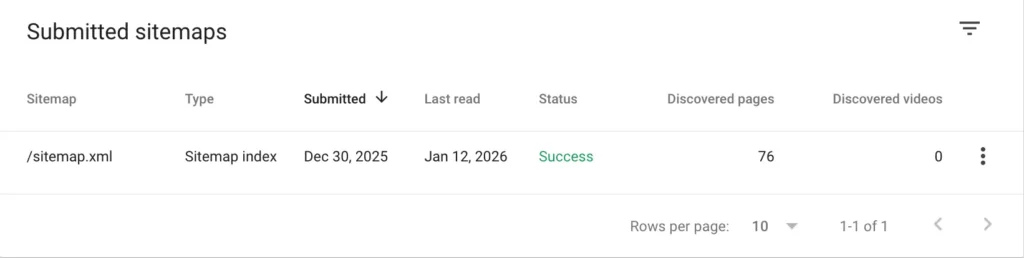
XML sitemaps help Google easily crawl your website and find new pages and posts after publication. Think of your XML sitemap as a website roadmap for search engine crawlers.
You can create a sitemap using the Yoast SEO plugin and submit your sitemap via Google Search Console.
URL Structure
Some HVAC websites use subfolders to separate their topics and subtopics. For example, a top-level page might cover HVAC services, while the sub-level pages target AC Repair Services and Furnace Repair Services.
Other websites use a flat URL structure, meaning every URL slug exists directly after the root domain name. In either case, the primary goal is to help Google and other search engines easily crawl your site.
Internal Links
Like sitemaps, internal links help Google crawl additional pages on your website. In addition, internal links also boost authority for pages and posts.
For example, linking your AC repair service page to your blog post about signs of AC damage can transfer topical authority from page to post.
Internal links also make it easier for search engines to crawl your site, especially those using a flat URL structure. Page URLs that are not visible on other pages are known as orphan pages because crawlers have difficulty locating and accessing them.
AI (GEO, AEO)
SEO for AI platforms, often called GEO and AEO, is the newest discipline within the broader search optimization landscape, and one HVAC companies must adopt to maximize online visibility.
While the leads generated from these platforms are currently lower than those from traditional search, they are growing and are essential to modern brand recognition.
The good news is that most of the foundational SEO principles translate directly to GEO, making a strong existing search campaign transferable to a subsequent GEO campaign.
AI Crawlability
Appearing in AI-generated answers tartes by ensuring LLMs can access your website and its content. Some hosting providers and CDNs, such as Cloudflare, block AI crawlers from accessing websites.
Consult with your hosting provider or other plugin providers to ensure that legitimate LLMs can access your website and use it to formulate answers to user prompts.
Much like traditional optimization, tasks like internal linking and website structure help AI crawlers quickly access your pages and posts.
Query-Fan Out Optimization
AI platforms like Gemini and ChatGPT use a technique called query fan-out, in which the user’s prompt is split into 8 or 9 subqueries, which are searched in parallel before synthesizing a consolidated answer.
A Dallas homeowner may search for best furnace repair company in dallas and the AI platform will fan out this into subqueries like top-rated furnace repair companies dallas and average cost of furnace repair in dallas tx.
If your website ranks for a broad range of relevant queries on traditional search, it is more likely to perform well in AI search because of this fan-out process.
NLP-Friendly Content
AI tends to gravitate toward content that follows natural language processing and utilizes language concepts such as semantic triples.
For example, the more often LLMs encounter a statement such as “Dave’s Heating and Cooling is a top-rated HVAC company in Denver, CO,” the more they can begin to associate the brand name with the characteristic and the location.
However, that doesn’t mean you should repeat the same statement over and over; this is considered the modern equivalent of keyword stuffing and will make your content appear as spam.
Local SEO
Local SEO is a sub-category of search engine optimization that applies to 99% of HVAC companies.
Local optimization shares many of the standard components but requires extra efforts to rank locally. For example, setting up a Google Business Profile is mandatory for Local SEO.
Most HVAC contractors have a business address and work in multiple service areas surrounding their central city.
As a result, it’s critical to set up and optimize your business listings. In addition, you must showcase evidence of your service areas on your website and submit your business information to local directories.
Google Business Profile
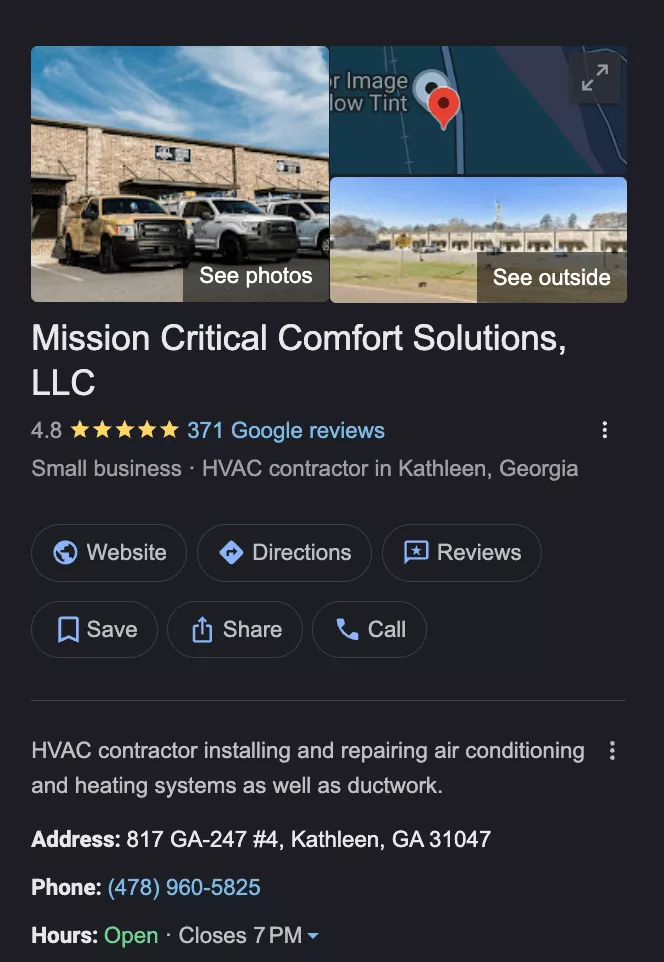
Your Google Local Listing, or Google Business Profile, is your most crucial citation as an HVAC company. It’s essential to claim and optimize your listing if you haven’t already.
Users who search for your brand name will see your listing in the knowledge panel on the search results page.
In addition, nearby users or those using location identifiers (e.g., “HVAC repair Seattle”) may see your listing in the Local 3-Pack for relevant queries.
Local Landing Pages
Local landing pages are similar to the city pages outlined in the content section, but are dedicated to office locations.
Some HVAC companies have multiple offices and multiple Google Business Profiles; in such cases, the secondary listing should link to a dedicated local landing page rather than the homepage, which is reserved for the primary location.
These location-specific landing pages clarify your regional authority and avoid confusing search engines and users about your business’s precise location.
Local Directories
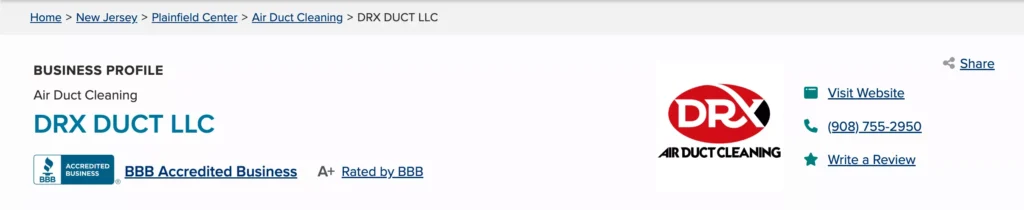
Submit your business information to major directories such as Angi, HomeAdvisor, Yelp, and BBB. As your address appears on more websites,
Google begins to view your entire brand as an entity with a confirmed location. As a result, you may start to rank higher for local searches.
Directory listings help organize your NAP information for local rankings. Optimized citations give you a greater chance to rank within the Google 3-Pack.
Helpful HVAC SEO Tips for 2026
Understanding SEO’s components is a great start. However, you still need helpful tips to get your campaign off to the right start. Follow these suggestions to avoid common search engine optimization pitfalls and overtake competitors on Google SERPs.
1) Focus on User Intent
HVAC companies often mistake targeting low-conversion keywords because they misinterpret user intent.
That’s why it’s more profitable to receive 20 clicks per month for a high-intent term like mini-split AC installation near me than 500 for a low-intent term like air conditioner not cooling.
Every user has a specific purpose with their search queries, typically transactional, informational, or navigational. Check out some examples of user intent below:
- Transactional intent: emergency ac repair near me
- Informational intent: ac not turning on in house
- Navigational intent: dave’s best hvac company
2) Build Brand Authority
The most successful SEO campaigns feed off a sustainable brand. For example, a name like Mission Critical Comfort Solutions will outperform a generic name like Denver HVAC Company in the long term.
Your brand gains notoriety as you garner more reviews on Google, Yelp, and Facebook, something you can accelerate by using software that sends automated review requests through text and email.
Similarly, as more people search for your brand name online, Google begins recognizing your brand name as an entity.
Combining brand building with SEO, social media marketing, and reputation management ensures a sustainable campaign that yields a substantial long-term ROI.
3) Create a Custom Website
SEO applies to every website, but custom websites typically perform better on search results. Everything from the codebase, photos, and navigation should be customized to fit your brand and impress visitors.
Furthermore, a stand-out design can increase dwell time and other behavioral metrics that signal quality and engagement. Custom websites also produce higher conversion rates for users who reach the homepage or service pages.
Consumers would much rather see unique photos of you, your staff, and your equipment than generic stock photos they can find on thousands of other websites. Remember to include calls to action (CTAs) throughout your website pages.
4) Measure Your SEO Campaign
Tracking your SEO campaign helps you diagnose problems and establish data-driven benchmarks. Install the Google Analytics tracking code on your website’s HTML and validate your domain on Google Search Console.
These Google-based tools will help you monitor traffic, clicks, queries, and other essential data. Google Search Console also provides insights about website errors, such as mobile usability issues, indexing problems, and manual penalties.
Aside from the technical insights, Search Console also shows you which queries users submit when finding your web pages and blog posts.
5) Demonstrate Expertise, Experience, Authority, and Trust (EEAT)
HVAC contractors can streamline Local SEO and reputation management with tools like DataPins, Podium, and Synup.
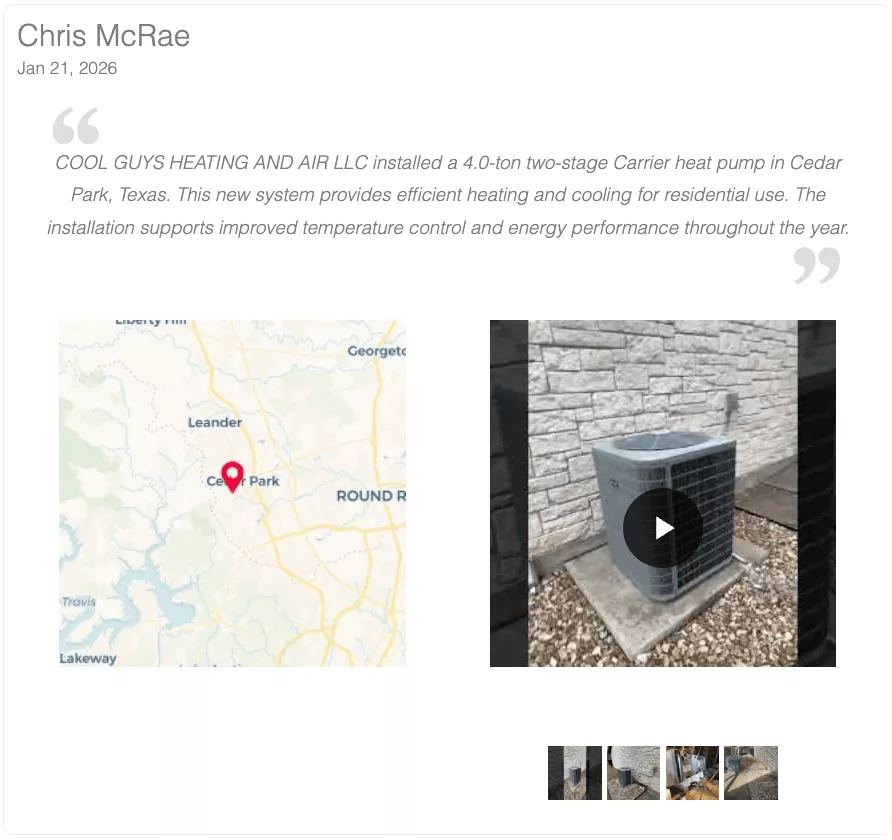
I recommend using software to document jobs via schema check-ins that send geo-coordinates and other local signals to Google. This allows you to showcase recent jobs on your website in various cities.
In addition to establishing significant Local SEO influence with on-page job evidence, it’s equally important to have automated systems for reputation management.
For example, many tools send automated review requests via SMS and email so that more of your customers remember to submit positive reviews of your business online.
Maximizing Your HVAC SEO Campaign in 2026
SEO can help HVAC companies generate 150-500 leads per month when properly implemented. In addition, the opportunity cost of not investing in search engine optimization is high and can hinder your company’s long-term growth and profitability.
As the founder and CEO of an agency that’s helped HVAC companies for more than 16 years, I have data showing which SEO strategies drive results in this industry. In 2026, companies must establish their brand online while addressing the foundational SEO principles, such as on-page and local optimization.
AI advancements have certainly added a wrinkle to local search visibility as consumer behavior continues to evolve. Still, businesses with existing search visibility have the foundation required to thrive in this new era of search.
By covering all components of a comprehensive search engine optimization campaign, local heating and cooling businesses can maximize their visibility across multiple search channels and enjoy a consistent lead stream that sustains long-term.
Feel free to reach out to my agency, HVAC-Plumber SEO Webmasters, to learn more about HVAC SEO in 2026 and how you can maximize your performance.