
SEO for plumbers drives business growth by putting your company in front of customers actively searching for plumbing services. The formula below comes from 16+ years and 1,000+ SEO campaigns as founder, owner, and operator of Plumbing Webmasters.

Key Takeaways
- Customer search terms split into foundation keywords (short, city-based), specialty keywords (service-specific), and hidden keywords (long-tail, invisible to keyword tools)
- Google has confirmed roughly 15% of daily queries have never been searched before, which is why keyword-tool volume alone understates real demand
- According to Ahrefs, Google Search Console hides the exact keyword terms for an average of 46.08% of all website clicks
- Google Business Profile signals now anchor most local search visibility
- Longtail keywords arise organically when you tag completed jobs to your website through different mechanisms (depending on your tech stack)
- Solo and budget-constrained plumbers can compete without agency-level investment, with different starting priorities
- Google has not published a confirmed, fixed list of ranking factors
Why Plumbers Need SEO
Plumbing-related search terms generate consistent, high-volume demand every month. Based on keyword research across plumbing client campaigns, that demand runs into the millions of searches monthly across foundation, specialty, and long-tail terms combined, creating a durable lead source that doesn’t depend on ad spend.
SEO won’t replace every part of your marketing, but it compounds with branding, advertising, and referrals, and it runs continuously rather than only during a campaign.

What is SEO for Plumbers?
SEO for plumbers is the process of creating and editing website pages and business listings to rank for relevant search terms on Google and other search engines. Most SEO guides call every search term a “keyword,” but not every term customers use behaves like one.
Customers search the way they talk, and that variation matters for ranking strategy. One customer might search “no hot water low water pressure fort worth,” while another searches “plumber near me for rheem water heater.” A working SEO formula accounts for both of these patterns, not just the short, high-volume terms.
What Google Has Actually Confirmed About Ranking
Google evaluates pages using automated systems that weigh many factors and signals across hundreds of billions of pages, rather than a small, fixed, publicly confirmed list.
That uncertainty is exactly why plumbers often bring in outside SEO help. Understanding the broad categories Google has publicly acknowledged, such as page experience, content quality, and technical performance, is enough to evaluate any agency’s recommendations on their merits.
How Consumers Find Plumbers on Google
Consumers type a term into Google and get back a mix of business listings and website links. Studying which terms customers use is called keyword research, and it only covers part of the picture: a large share of the terms customers actually search are absent from keyword research tools and Google Search Console data alike.
Foundation Keywords
Foundation keywords are straightforward, location-based terms customers search directly:
- Plumbing dallas
- Plumber houston
- Plumbing miami
- Plumber seattle
- Plumbing fort worth
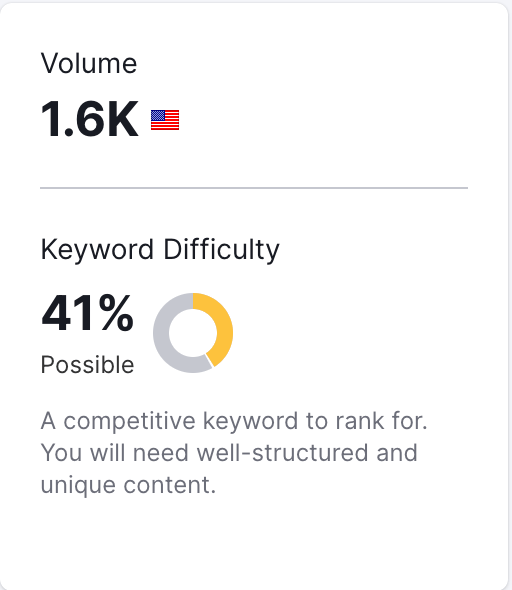
Tools like Ahrefs and Semrush estimate volume for these terms reliably because they’re common enough to register. Related variants worth targeting include “plumbing repair dallas,” “plumbing company houston,” and “plumbing inspection seattle.”
Specialty Keywords
Specialty keywords reflect a customer’s specific need rather than a general search for “plumber.” Start by listing every service your company offers: residential plumbing, commercial plumbing, emergency plumbing, drain cleaning, sewer line repair, water heater installation, leak detection, pipe repair, hydro jetting.
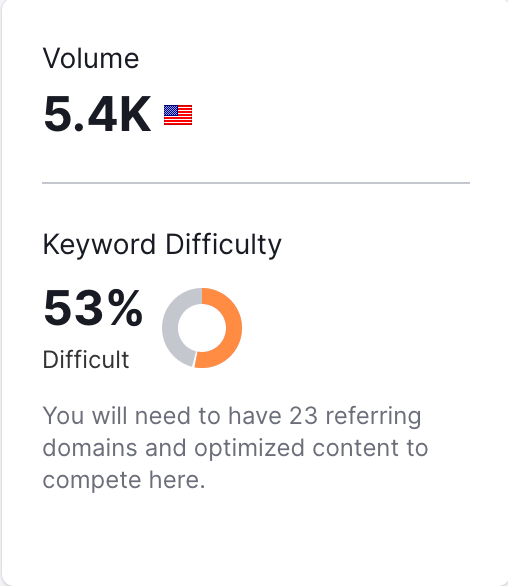
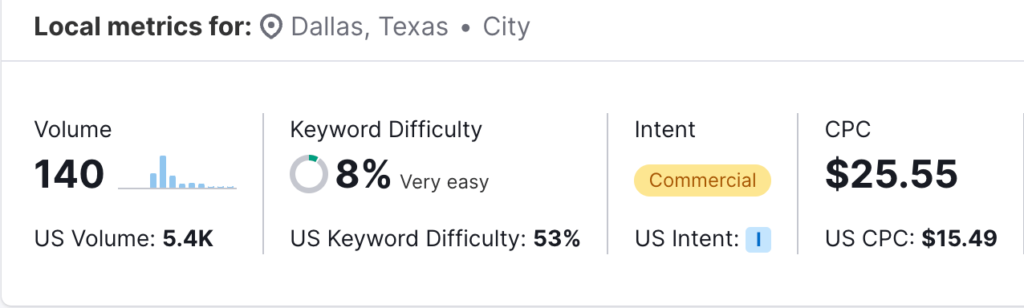
When measuring specialty keyword volume, check both local and national numbers alongside your city’s population. A term like “sewer line repair” might show a national volume of 5,400 against a local volume of just 140 in a city of 500,000, which together still indicate a high-opportunity keyword despite the small local number alone.
Hidden Keywords
Hidden keywords account for a large share of organic website visitors even though keyword tools can’t measure them directly. These are typically long-tail queries three words or longer, such as “emergency drain cleaning service round rock.” Entering a term like this into Semrush returns “N/A” for volume, which doesn’t mean no one is searching for it.
Google has confirmed this gap at the platform level: a consistent share of daily search queries, historically around 15% today and 25% back in 2007, have never been searched before. No keyword database, including Ahrefs or Semrush, fully captures that volume.
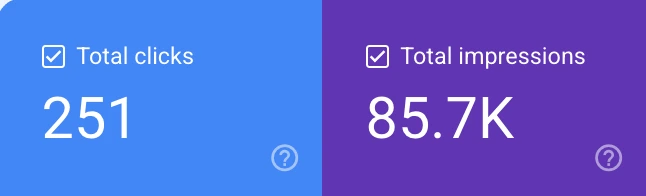
An independent study from Ahrefs found that Google Search Console hides the exact keyword terms for an average of 46.08% of all website clicks.
The hidden terms are primarily low-volume, highly specific long-tail keywords. Because these queries are unique and searched by only a few people, Google hides them to prevent tracking individual users.
To account for hidden terms:
- Pull job history from your field management app (ServiceTitan, Housecall Pro, Jobber) and review it for recurring phrasing
- Transfer that data into a spreadsheet and look for patterns in how customers describe problems
- Consider software built to tag completed jobs to relevant service pages automatically
SEO Content for Plumbers That Drives Leads
Ranking on Google is only half the goal; content also has to convert visitors into leads. Many plumbers publish hundreds of blog posts assuming volume alone builds authority.
This usually backfires: Google frequently declines to index low-value posts, and the ones it does index can dilute a site’s overall quality signals. Content targeting commercial intent directly is a stronger use of the same effort.
A commercial-intent page might look like this:
Title: Hydro Jetting Services in Fort Worth, TX | Company Name Meta Description: Company Name offers skilled hydro jetting services in Fort Worth, TX. Our 100+ 5-star Google reviews demonstrate our commitment to professional hydro jetting solutions for Fort Worth homeowners.
Trust and Experience Signals
Google’s May 2026 core update placed additional emphasis on content demonstrating real experience and trustworthiness. Google employs search quality raters to evaluate existing pages against its guidelines, and pages that fail to demonstrate genuine expertise or firsthand experience are flagged for algorithmic adjustment.
Plumbers can demonstrate these signals concretely:
- Awards and industry badges
- Recent completed jobs with photos
- Unique, non-stock photography
- Credentials and plumbing license numbers
- Structured schema markup
User Intent
User intent is a confirmed factor in how Google matches results to searchers, and it comes in three forms. Commercial intent means the searcher is ready to book, as with “emergency plumbing repair fort worth.” Informational intent means the searcher wants an answer, as with “what causes pinhole leaks in copper plumbing.” Navigational intent means the searcher wants a specific brand.
Effective plumbing SEO content targets commercial intent primarily. A comprehensive hydro jetting service page that showcases recent jobs meets a commercial searcher’s goal directly. Informational content, typically published as blog posts, attracts vanity traffic that rarely converts, and in excess can trigger Google’s Helpful Content classifier against your site.
Goal Completion
Google measures on-site user engagement as part of ranking. Internal Google documents disclosed during the U.S. v. Google antitrust trial confirmed that click and user-interaction data feed into search ranking. That disclosure is from 2023 court exhibits, not a recent development, but it remains the clearest public confirmation available.
For a local plumbing company, the strongest on-site signal is a completed goal: a booking button, a click-to-call number, or a submitted contact form. Structuring content toward one of these actions improves both lead generation and the engagement signals Google measures.
Local SEO vs. Regular SEO for Plumbers
Local SEO and regular SEO rank through different mechanisms, and local is generally the faster path to traffic.
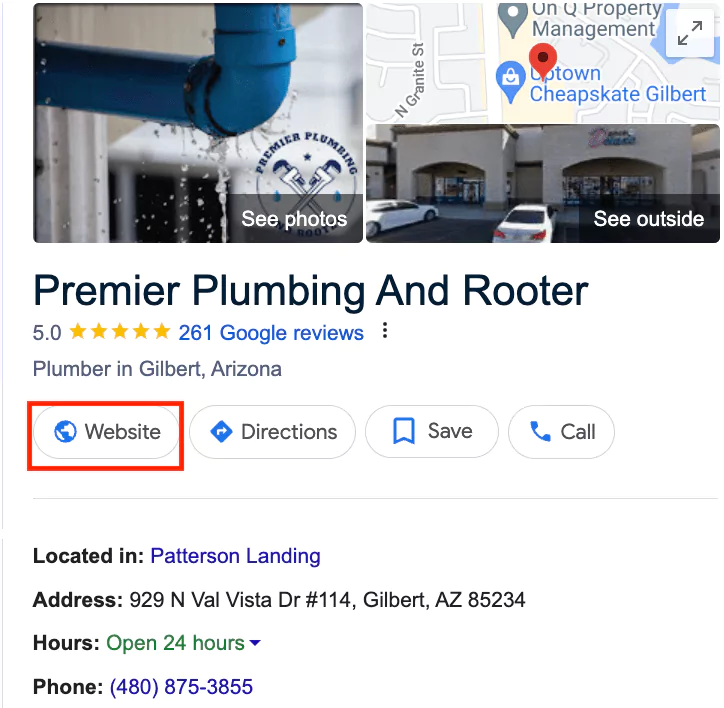
Local keywords face less competition, and Google Business Profile signals now anchor most local search visibility, according to Whitespark’s 2026 Local Search Ranking Factors research. Claiming and completing your Business Profile, including the website URL field, is the entry point into Maps visibility.
| Local SEO | Regular (Organic) SEO | |
|---|---|---|
| Ranking surface | Maps and Local Pack | Traditional organic results |
| Key input | Business Profile completeness | On-page content, backlinks |
| Competition | Lower, geographically bounded | Higher, national or topical |
| Fastest lever | Optimizing your Business Profile | Commercial-intent service pages |
Distance
The distance factor measures the distance of the searcher’s location from your verified business location. You cannot influence it unless you actually move your business. For plumbing companies on the outskirts of cities, a business move is sometimes worth considering for SEO purposes alone.
Relevance
The relevance factor accounts for your Google Business Category, business name, and the services listed on your profile and website. Because your website plays a role, you can influence relevance by showcasing recent jobs and your full service list.
Prominence
Prominence accounts for reviews, years in business, and brand recognition. Nationally recognized companies like Roto-Rooter carry built-in prominence from decades of brand presence. You can build your own company’s prominence over time by requesting customer reviews consistently.
When this doesn’t apply: a business with strong distance and relevance signals but few reviews will still underperform a closer competitor with review volume. Prominence takes longer to build than the other two factors and rarely shows results in the first few months.
Localized Organic Results and City Pages
Google Maps accounts for a substantial share of local search visibility, with the remainder coming from traditional organic results. Plumbing websites can build city pages to rank for locations across their service area, but city pages carry real risk if built improperly.
A city page becomes a doorway page and violates Google’s guidelines when it exists to funnel users into your site under false pretenses. Mass-producing hundreds of city pages by swapping city names into a template is the clearest example. Google’s systems detect this pattern and classify the content as thin, which can damage your entire site’s ranking.
When city pages work: a unique city page that showcases actual completed jobs, local photos, and specific service details for that location is within Google’s guidelines and ranks reliably. The difference between a doorway page and a legitimate city page isn’t the existence of the page; it’s whether the content reflects real, location-specific work.
SEO for Solo and Budget-Constrained Plumbing Companies
Not every plumbing company operates at agency-partnership scale, and the fundamentals above still apply to a one-truck business, just with different starting priorities.
A solo operator with no existing reviews should prioritize claiming and fully completing a Google Business Profile first, since prominence takes the longest to build. Foundation keyword targeting on a small number of core service pages delivers more early return than a broad specialty-keyword build-out.
When this doesn’t apply: a brand-new company with zero completed jobs and zero reviews won’t see meaningful local ranking movement from content alone in the first few months. Prominence-related visibility has to be earned through actual service history first.
Avoiding SEO Misinformation
SEO misinformation spreads easily through social platforms and blog posts from people without direct agency experience. The first question worth asking about any SEO advice is whether the source has actually run an SEO agency. If not, the recommendation is speculation rather than practice.
Common misinformation patterns:
- Claiming all your keywords can be found on Semrush and Ahrefs alone
- Claiming a #1 ranking for “plumber + city” guarantees a fixed click percentage
- Claiming every blog post helps other pages rank through undefined “topical authority”
- Claiming that buying backlinks doesn’t violate Google’s guidelines
A basic vetting checklist before hiring any SEO agency:
- Has the agency run plumbing or home-service campaigns specifically, not just general local business SEO
- Can they show ranking or traffic results tied to named client campaigns
- Do they explain their methodology, or only promise outcomes
- Do they recommend tactics that violate Google’s guidelines, such as backlink purchasing or doorway pages
Conclusion
Targeting the right mix of foundation, specialty, and hidden keywords, building content around commercial intent, and fully optimizing a Google Business Profile puts a plumbing company ahead of most local competitors.
None of this requires guessing at Google’s exact ranking formula, since no confirmed formula exists. It requires consistent execution against fundamentals that are actually documented and testable.
By implementing strategies that have consistently produced results across a broad cross-section of plumbing SEO campaigns, you can move forward with confidence.

Author: Nolen Walker
Nolen Walker is the founder of Plumbing Webmasters and the creator of DataPins™, a Local SEO platform for plumbing companies. He has over 16 years of experience helping plumbing businesses grow through organic search, Google Maps, and AI-driven visibility.
Nolen is the author of A Complete SEO Guide for the Plumbing Small Business Owner. He also hosts The Plumbing SEO Podcast on Spotify.