
Email marketing returns more revenue per dollar spent than most other digital channels available to a local plumbing company. Litmus’s State of Email research puts the average return at $36 for every $1 spent, based on its 2025 survey of marketing professionals.
For a plumbing business, that return comes from a channel with low operating costs and direct access to people who already have some relationship with the brand, whether as past customers, quote requesters, or newsletter subscribers.
Email works best as part of a broader digital strategy rather than a standalone tactic. Plumbing companies that pair email with SEO, AEO, Google Business Profile optimization, and consistent branding see stronger open and engagement rates, because recipients are more likely to trust and act on messages from a brand they already recognize.
Key Takeaways
- Email marketing delivers one of the strongest returns of any digital channel available to plumbing companies. Litmus’s State of Email research puts the industry average at $36 returned for every $1 spent.
- Segmentation, single-CTA formatting, and consistent branding have the strongest evidence among the tactics covered here.
- Email works best as one channel inside a broader local marketing strategy that includes SEO, AEO, and Google Business Profile, not as a replacement for paid advertising.
- The CAN-SPAM Act sets specific federal requirements for commercial email, including sender identification and opt-out mechanics, and applies to every plumbing company that emails customers.
- Email marketing underperforms when list quality, segmentation, or brand recognition are weak. That is usually a fixable execution problem, not a sign the channel doesn’t work for plumbers.
Setting Plumbing Email Marketing Goals
Plumbing companies that skip goal-setting typically abandon their email programs within the first few months. Two practices reduce that risk.
Marketing integration. Email campaigns perform better when they align with a company’s broader marketing objectives, such as lead generation, brand building, and website traffic. A plumbing company’s website, Google Business Profile, and social accounts all reinforce the same brand signals that make recipients more likely to open and trust an email.
SMART goals. Defining email objectives within SMART parameters (specific, measurable, attainable, relevant, time-sensitive) gives a plumbing company a concrete way to track progress. Example targets a company might set include:
- Increase open rates by 20% in 90 days
- Increase website traffic by 30% in 180 days
- Increase qualified weekly leads by 15% in 300 days
These are illustrative starting points, not sourced industry benchmarks. Each plumbing company’s realistic targets will vary based on budget, list size, and market.
Email vs. Other Digital Marketing Channels
Email is not a substitute for paid search or SEO. It plays a different role in a plumbing company’s marketing mix.
| Channel | Best for | Audience ownership | Typical cost model |
|---|---|---|---|
| Email marketing | Retention, repeat business, review requests | Owned (the company controls the list) | Low fixed cost, mainly platform fees |
| PPC (Google Ads) | Fast, high-intent lead capture for new customers | Rented (access ends when spend stops) | Pay-per-click, scales with budget |
| Social media | Brand visibility, community building | Rented (platform-dependent reach) | Time-intensive or ad-spend dependent |
A plumbing company generating consistent leads from SEO, a strong Google Business Profile, and organic reviews will generally see stronger email performance, because recipients are more likely to trust and open messages from a brand they already recognize outside the inbox.
Email should not replace paid or organic channels. It works alongside them, most effectively to retain existing customers and prompt repeat business rather than acquire new ones.
Building an Email List Before You Start
An email marketing program only works once a plumbing company has subscribers to send to. Three sources typically make up the bulk of a starting list:
- Past customers. Every completed job is an opportunity to capture an email address, whether through an invoice, a follow-up thank-you message, or a review request.
- Website and quote-request forms. Adding an email opt-in to existing contact and quote forms captures new prospects without adding a separate signup step.
- In-person and phone interactions. Technicians and office staff can ask for an email address as a routine part of scheduling or closing out a job, as long as the customer knows what they’re signing up for.
A plumbing company does not need thousands of subscribers to see a return. A smaller, engaged list of actual customers and prospects will outperform a large list of low-quality or purchased addresses, since deliverability and engagement rates depend heavily on how relevant each subscriber finds the content.
Compliance: What CAN-SPAM Requires
Every commercial email a plumbing company sends is subject to federal law, regardless of list size or business type. The CAN-SPAM Act, enforced by the Federal Trade Commission, sets specific requirements for commercial email and gives recipients the right to stop receiving messages. Core requirements include:
- Accurate “From,” “To,” and “Reply-To” information that identifies the actual sender
- A subject line that reflects the email’s actual content, not a deceptive or misleading one
- Clear identification that the message is an advertisement, where applicable
- The business’s valid physical postal address included in the message
- A working opt-out mechanism, honored within the legally required timeframe
The law applies even when a plumbing company hires a third party, such as a marketing agency, to send its emails. Legal responsibility for compliance stays with the business whose services are being promoted.
Email Marketing Tips for Plumbers
1) Focus on Ideal Customers
Sending every campaign to an entire subscriber list is one of the fastest ways to damage deliverability and open rates. Segmenting a list by customer type lets a plumbing company send more relevant messages to smaller groups, which reduces bounce and spam-complaint rates.
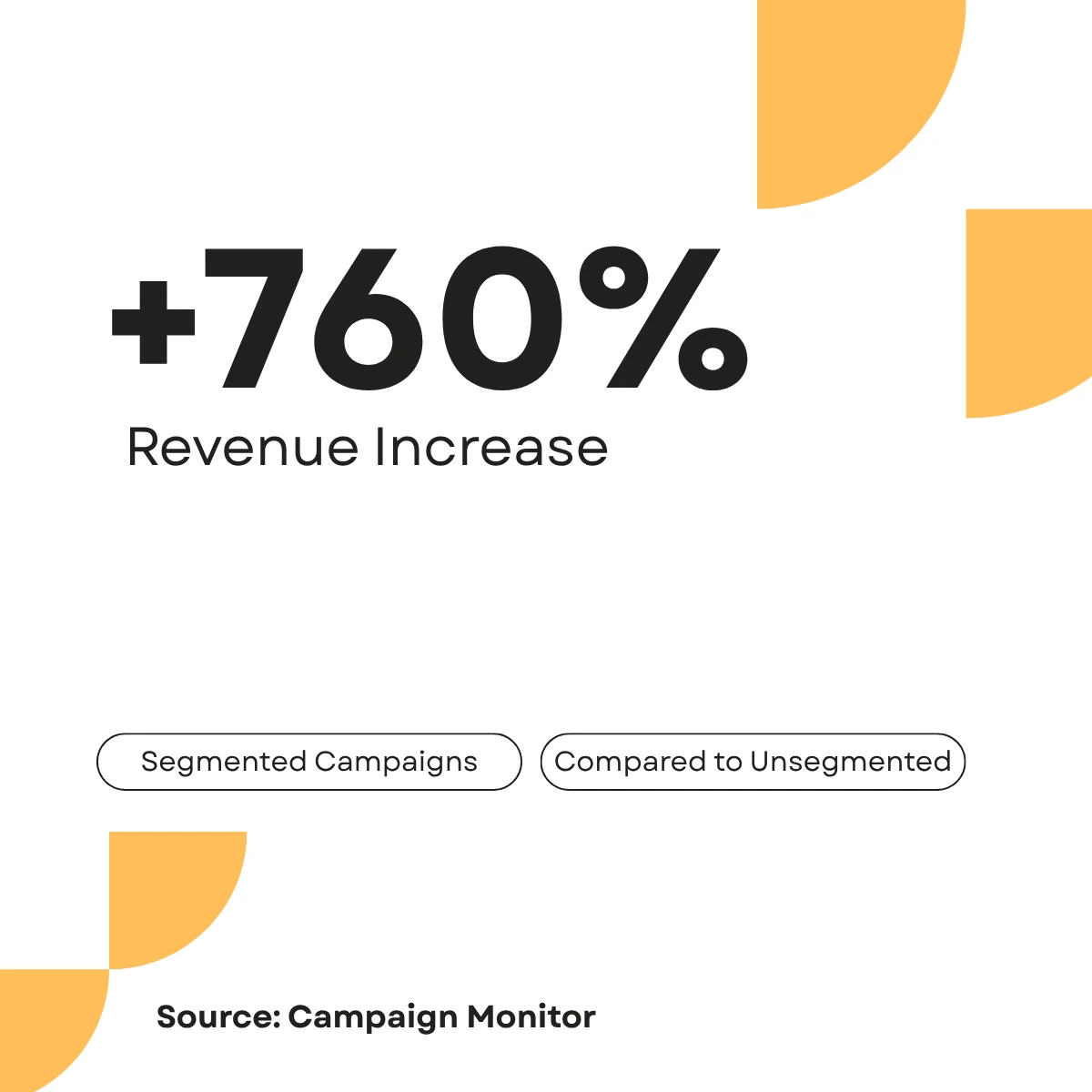
Campaign Monitor’s research found that marketers using segmented campaigns saw as much as a 760% increase in revenue compared to unsegmented sends.
Common segments for a plumbing company include:
- Repeat customers: subscribers who have used the company’s services multiple times and are the most likely to book again
- First-time homeowners: subscribers at a life stage associated with specific plumbing needs
- New subscribers: recent signups who are typically looking for more information, reviews, or introductory offers
A plumbing CRM that tracks service history and customer type makes this segmentation easier to build and maintain over time.
2) Optimize Subject Lines to Improve Open Rates
Homeowners receive well over 100 emails a day from businesses, so a subject line has to earn attention to get opened. Personalizing the subject line with a merge field like the recipient’s name is one of the simplest ways to stand out.
Adding a relevant emoji can draw additional attention, but the subject line still needs to communicate clear value on its own. Preview text, generally 50 to 80 characters, gives a plumbing company room to reinforce that value proposition before the recipient opens the message.
3) Write Clear, Mobile-Friendly Email Copy
Brief, scannable email copy built around a single call to action converts better than long, multi-purpose messages. Campaign Monitor’s research found that emails with a single CTA received 371% more clicks than emails with multiple competing CTAs.
Addressing the subscriber by first name adds a layer of personalization on top of the segmentation and formatting choices already driving performance. Combined with a correctly segmented list, this approach gives a plumbing company’s emails the best chance at a high conversion rate.
4) Build Consistent Branding Across Channels
Recipients are more likely to open, engage with, and convert on emails from brands they already trust. Trust is now a purchase indicator on par with quality and price:
Edelman’s 2026 Trust Barometer found that 88% of consumers say trusting a brand is an important or critical purchase criterion, close to the shares who say the same about quality (89%) and value (88%).
Plumbing companies build that trust through consistent branding, meaning the same name, logo, color scheme, and website URL across Facebook, Instagram, YouTube, Google Business Profile, and email. Consistency here strengthens open and conversion rates and reinforces the same signals that support a company’s SEO rankings.
5) Clean the Email List on a Regular Schedule
Maintaining your list directly affects deliverability. Removing disengaged subscribers and merging duplicate entries keeps a plumbing company’s list lean and its sender reputation intact.
A monthly cleaning cadence catches inactive addresses before they accumulate and start dragging down open and click rates across the whole list.
Clean lists also reduce bounced or unopened messages, which internet service providers use as a signal when deciding whether future emails land in the inbox or the spam folder.
6) Build a Mobile-First Email Experience
Most homeowners will read a plumbing company’s promotional emails on a phone rather than a desktop, whether through the Gmail app, Apple Mail, or another mobile client.
Short subject lines and concise emails improve readability on a small screen, and a mobile-optimized, easy-to-tap CTA button matters as much as the copy itself.
Testing subject line length and email format against your own list’s open and click data will show what actually works for your specific audience, since mobile email behavior varies by industry and region.
7) Use Email Campaign Automation
Automation lets a plumbing company run consistent campaigns without manually managing every send. Common automation capabilities include the ability to:
- Send hundreds of emails at once with a single trigger
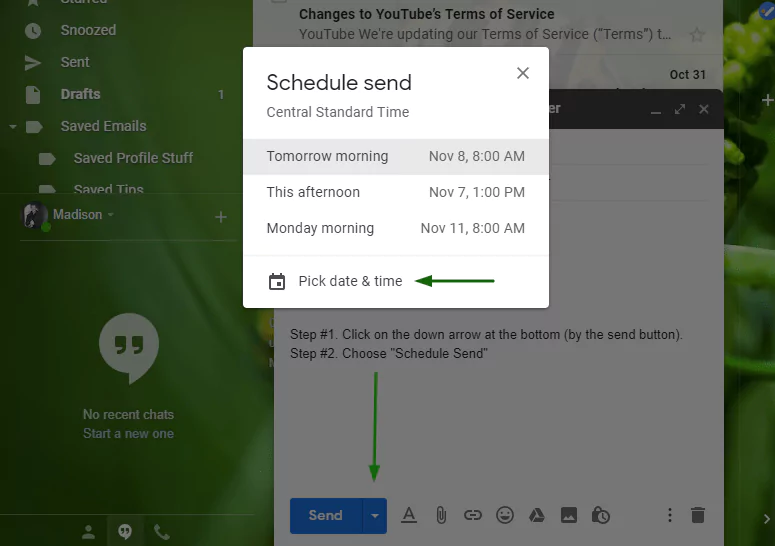
- Schedule sends for a specific time of day or day of the week
- Personalize follow-up emails based on a subscriber’s form responses
- Adjust a subscriber’s next message based on how they responded to the last one
Setting this up up front turns a plumbing company’s email program into a system that moves each new subscriber through a consistent journey, and the same automation can reactivate dormant subscribers who fell out of active engagement.
8) Use Email to Request Reviews
Email is an effective, underused channel for generating reviews, and Google’s review-solicitation rules do not restrict the channel itself. Google Reviews are an SEO ranking factor for plumbers, and reviews across other platforms, including Facebook, Yelp, Angi, and the Better Business Bureau, contribute to both branding and conversion rates.
A plumbing company can build a review-request step into its post-service email sequence, whether through a manual template or a review-management platform’s built-in email feature.
What matters is how the request is structured. Google’s Prohibited and Restricted Content policy bars businesses from offering incentives for reviews, discouraging negative feedback, selectively soliciting only positive reviews, and, as of an April 2026 policy update, directing staff to request a specific number of reviews or reviews that name a specific staff member.
A compliant email request asks every customer, uses neutral, open-ended language such as “share your experience” rather than a scripted prompt, and does not pre-screen customers by sentiment before sending the review link.
That last practice, known as review gating, is one of the more common ways automated review-request workflows drift out of compliance without anyone intending it.
Enforcement has increased alongside the policy changes. Google reported blocking or removing over 292 million policy-violating reviews in 2025, up from 240 million the year before, using AI-assisted detection. A plumbing company’s review requests, whatever tool sends them, should be checked against this policy periodically rather than set up once and left alone.
9) Include Customer Testimonials in Emails
Testimonials from long-tenured customers add social proof that prospects respond to, since people are more influenced by the experience of customers they can relate to than by a company’s own claims.
Video testimonials tend to carry more weight than text alone because they’re harder to fabricate and easier to connect with emotionally, though no verified industry benchmark quantifies that gap.
When video isn’t available, text-based reviews from credible platforms like Google and Yelp still support conversions and are far easier for a plumbing company to collect at scale.
10) Keep a Consistent Sending Schedule
Consistency in send timing matters more to subscribers than hitting a universal “best” hour. As a local plumbing company, most subscribers will be in the same time zone, so it makes sense to pick a regular day and time and stick to it.
Testing a few different send windows against your own list’s open-rate data, rather than assuming a fixed national benchmark applies to your market, is the more reliable way to find your best send time.
Once you set a schedule, don’t change it without a clear performance reason from your own analytics.
11) Measure Email Campaign Performance
Tracking performance is what separates a plumbing company’s productive email program from one that quietly declines. Software like AWeber and Mailchimp includes analytics for tracking these core metrics:
- Open rate
- Click-through rate
- Conversion rate
- Bounce rate
A sudden drop in any of these numbers is a signal to review recent changes, whether to the subject line format, send schedule, or list segmentation, the same way a plumbing company would use Google Analytics or Search Console to diagnose a website performance issue.

Source: aweber.com
When Email Marketing Doesn’t Work for Plumbers
Email marketing underperforms for plumbing companies under a few specific, identifiable conditions.
The list is too small or too cold. A list built from purchased addresses, or one that hasn’t been emailed in over a year, will produce poor open rates no matter how well the campaign is built. Rebuilding engagement with a smaller, re-permissioned list usually outperforms mailing a large, stale one.
The brand isn’t established elsewhere. Recipients who don’t recognize a plumbing company from search results, Google Business Profile, or word of mouth are less likely to open or trust an email from that business, no matter how well-formatted the message is. Email amplifies existing trust; it doesn’t create trust on its own.
Sends are inconsistent or infrequent. Subscribers who receive an email every few months with no established pattern are more likely to forget signing up and mark the message as spam, which damages sender reputation for future campaigns.
Compliance gaps exist. A missing opt-out link, inaccurate sender information, or a purchased list without proper consent creates legal exposure under CAN-SPAM and increases the odds of spam-folder placement, independent of how good the email content is.
None of these are reasons to abandon email as a channel. They’re diagnostic signals pointing to what needs fixing before a plumbing company’s email program can deliver the kind of return the channel is capable of.
The Bottom Line
Plumbing email marketing works best when it’s treated as one part of a coordinated local marketing strategy, built on a real, permissioned list, and measured consistently against a company’s own data rather than generic industry averages.
Getting the fundamentals right (segmentation, single-CTA formatting, consistent branding, and CAN-SPAM compliance) does more for a plumbing company’s return than any individual tactic on its own.

Author: Nolen Walker
Nolen Walker is the founder of Plumbing Webmasters and the creator of DataPins™, a Local SEO platform for plumbing companies. He has over 16 years of experience helping plumbing businesses grow through organic search, Google Maps, and AI-driven visibility.
Nolen is the author of A Complete SEO Guide for the Plumbing Small Business Owner. He also hosts The Plumbing SEO Podcast on Spotify.