
One of the frustrating realities of the plumbing industry is that you can be the most skilled technician in your service area, and yet your phone doesn’t ring, and you don’t consistently get new customers.
Consistent plumbing leads come from systems, not skill alone. That’s precisely why building a reliable lead engine is fundamental for business success, even if your skills, equipment, and techniques are already at an elite level.
Consumer demand is rarely the culprit. Plumbing is an essential service, which means homeowners seek out reliable plumbers in nearly any market condition. The opportunity is substantial, and so is the competition for it.
In the following article, we lay out 7 helpful ways to generate plumbing leads based on my experience, including cost benchmarks, realistic timelines, and scenarios where each method is the wrong fit.
Key Takeaways
- Plumbing leads are inquiries potential customers make to your business via phone calls, website form submissions, text messages, and emails.
- The fastest lead channels are paid: Google Local Services Ads for plumbers typically average $30-$90 per lead, while non-branded Google Ads search campaigns generally range from $150 to over $200 per lead, depending on local market competition.
- The slowest channels compound: Google’s own guidance says SEO results can take several months, but organic visibility costs nothing per lead once established.
- Local SEO, anchored by a complete Google Business Profile, is the foundation on which all other methods build.
- 97% of US consumers read online reviews for local businesses (BrightLocal), making reviews a direct lead-generation lever.
- Generating your own leads through owned channels beats buying shared leads for long-term cost control, though purchased leads can bridge the gap for brand-new companies.
Plumbing Lead Types
There are numerous types of plumbing leads, including exclusive, shared, residential, and commercial. Your ideal inquiry may vary depending on your business type and sales structure.
Check out the types of plumbing leads below:
- Shared Leads: Contact information forwarded to multiple plumbing companies by a 3rd party
- Exclusive Leads: Contact information submitted directly to a plumbing company
- Residential Leads: Inquiries made by residential homeowners
- Commercial Leads: Inquiries made by commercial business owners
- Emergency Leads: Urgent inquiries requiring immediate response
Understanding Plumbing Lead Types
Not all leads are equally valuable; know what you’re paying for.
| Lead Type | Definition | The “Bottom Line” |
|---|---|---|
| Exclusive | Sent only to you. | Highest ROI; builds long-term brand equity. |
| Shared | Sold to 3–5 plumbers. | A “race to the bottom” on price, requires instant response. |
| Emergency | Immediate pipe/water crisis. | High profit margin; requires 24/7 availability. |
| Commercial | B2B service inquiries. | Slower sales cycle; massive long-term contract value. |
Which lead type you should prioritize depends on your business type, market, and growth stage, a question this article answers directly in the “Which Methods Fit Your Business?” section below.
Helpful Methods to Generate Leads for Plumbers
1) Local SEO
According to the SOCi Consumer Behavior Index (2024), 80% of US consumers search for local businesses every week, and 32% search daily. Search intent for plumbers is location-specific, which is exactly what Local SEO targets.
Claiming and verifying your Google Business Profile is the foundation of Local SEO for plumbers, but it also extends to your website, citations, and reviews.
Helping Google and its users associate your company with your target service area is the key to unlocking local leads.
Local SEO Keyword Research
Keyword research tools surface only a fraction of local search terms, so keyword targeting matters more than tool-driven “research” at the regional level.
In a 2020 analysis of 306 million keywords, still the largest study of its kind, Backlinko found that 91.8% of all search keywords are long-tail terms receiving fewer than 100 monthly searches.
If anything, that figure is a conservative floor today: conversational AI search has pushed user queries even further toward long-tail phrasing since the study was published.
These are precisely the local query variations that third-party tools underreport at the city level, which is why your keyword strategy must extend beyond third-party research data.
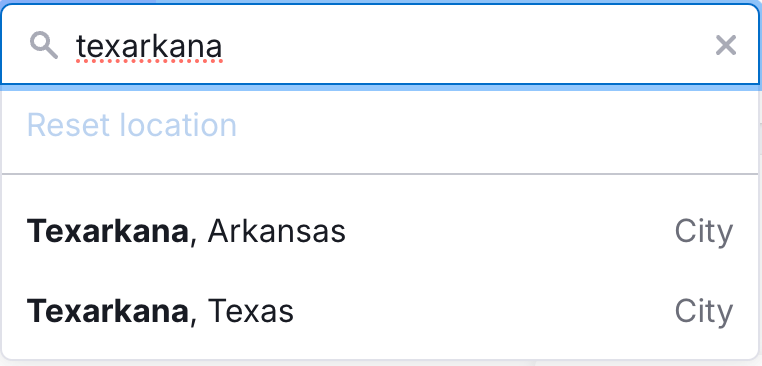
SEMRush’s location field remains useful for estimating the volume of primary terms like “plumber” at a hyperlocal level. Treat that data as a floor for demand rather than as empirical.
Google Business Profile
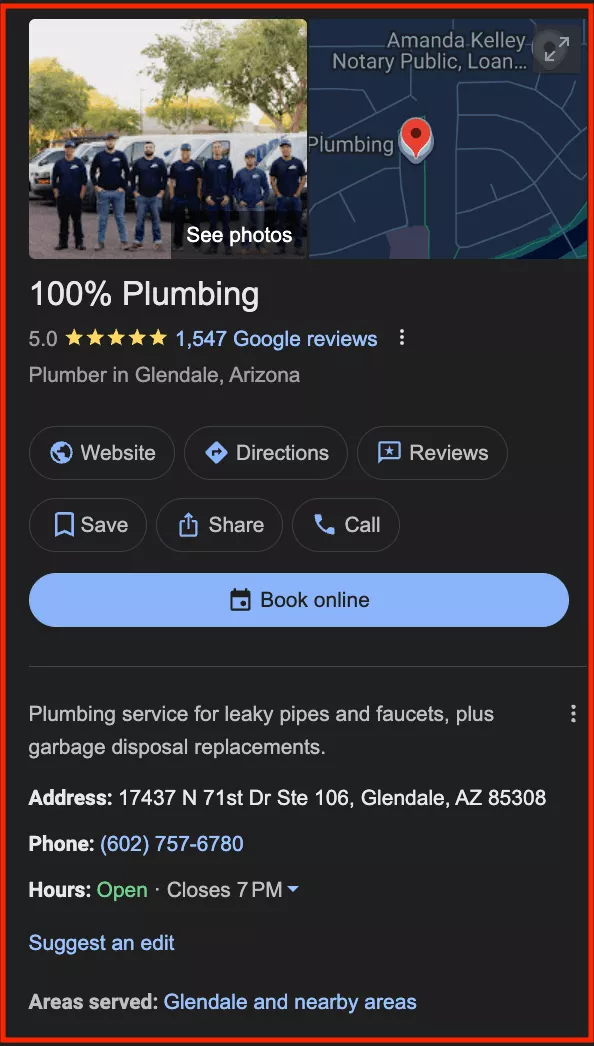
Claiming and verifying your company’s Google Business Profile allows you to rank on Google Maps and the Google Map 3-Pack.
Use this setup checklist to make your profile complete:
- Claim and verify your Google Business Profile
- Enter your exact legal business name; adding keywords to your name violates Google’s guidelines
- Select “Plumber” as your primary category
- Add your business address, or define a service area if you work from a home base
- Set accurate hours, including 24/7 or emergency availability if you offer it
- Upload your company logo, truck and team photos, and photos of completed jobs
- List your services with descriptions
- Add your website URL and social media links
- Collect reviews consistently
Your business address plays a significant role in your local rankings on Google Maps, so a legitimate address close to the city’s center is ideal for visibility in metro markets.
Using a fake address, a virtual office, or a friend’s or employee’s address violates Google’s “Guidelines for representing your business on Google” and is grounds for profile suspension.
If you operate in a rural area, a small market, or from a home base, the address guidance changes and involves a genuine tradeoff.
Google’s guidelines require service-area businesses to hide their address if customers don’t visit it, but Sterling Sky’s testing found that hiding an address significantly lowered Map Pack rankings, which recovered once the address was restored.
Note that the service radius you draw on your profile is visual only; Google still calculates proximity from your verified address, so verify your profile at an address within the market you actually serve.
In low-population markets, the lower competition density gives profile completeness and review count more room to offset the hidden-address disadvantage; track your Map Pack rankings after any address change so you can see the effect directly.
Local Website Optimization
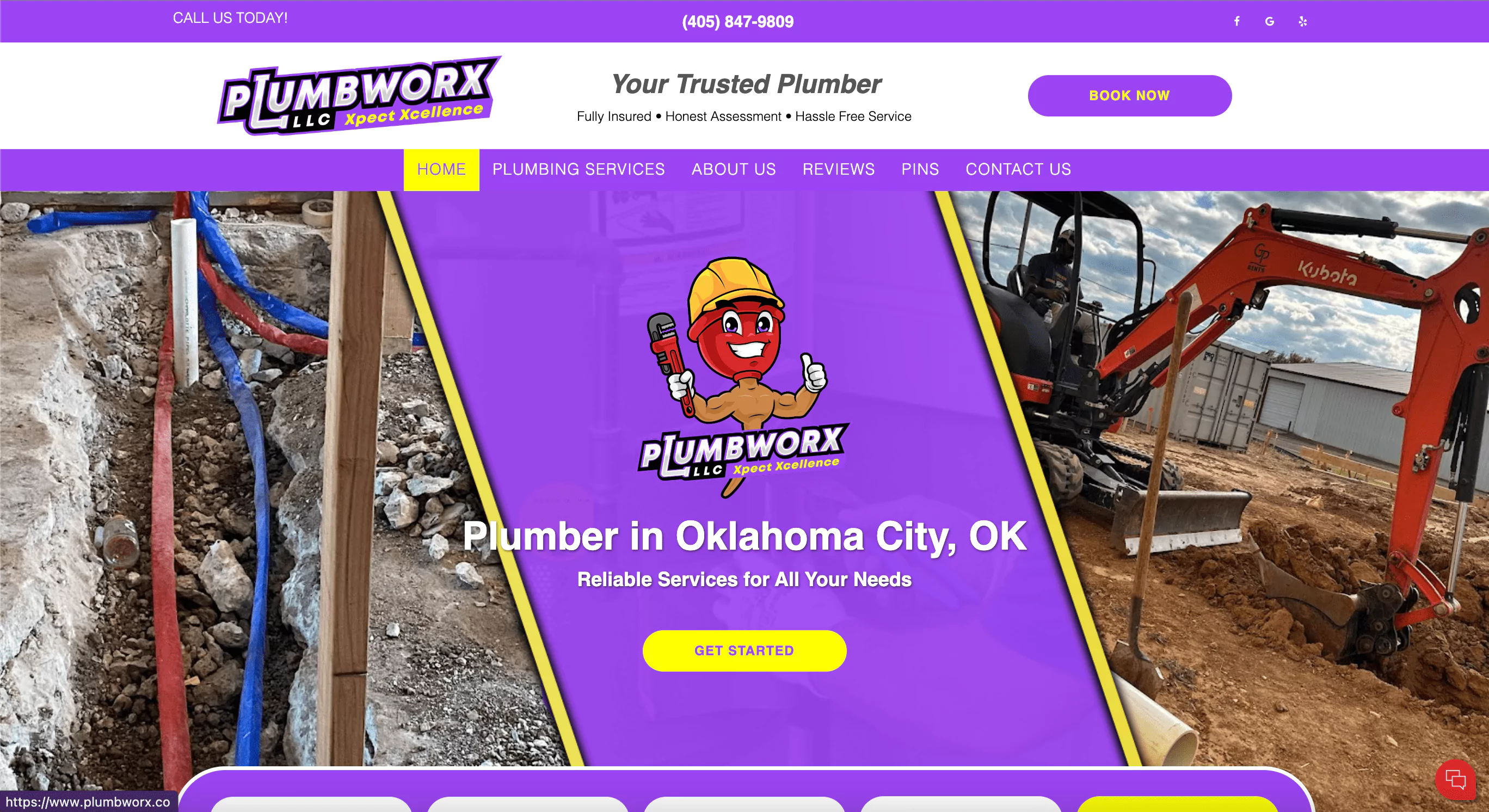
Your website’s homepage should feature your business address and include your target city within its title tag, H1, and primary content.
Including your location on your website helps you rank in organic search results for local queries and improves your Google Business Profile’s visibility in Google Maps.
You can expand your visibility into other nearby cities with local landing pages or “city pages.” Be careful with how many city pages you create: producing many near-duplicate pages can cause them to function as “doorway pages,” which Google’s spam policies explicitly prohibit.
2) Organic SEO
A Google Business Profile alone is not sufficient to earn local leads online. Your company must also invest in an organic search presence through traditional on-page SEO and content.
For example, Roto-Rooter Chattanooga, a Plumbing Webmasters client since 2020, recorded 6,700 website visits in 2024, an 89.9% increase over 2023, with traffic rising every year since the site launched (per our published case study). That campaign included nearly 7,000 jobsite check-ins published through our DataPins software over four years.
While organic SEO generates less total traffic than it once did, it is still vital to helping web pages get sourced for plumbing-related answers on AI platforms like Gemini and ChatGPT and “website justifications” on Google’s Local Pack.
How Long Does Plumbing SEO Take?
SEO for plumbers can take several months to produce results, according a Google’s own guidance for businesses hiring SEO help.
Based on our experience running an SEO agency, 4-12 months is a reasonable timeframe, as variables such as your starting position, service area, and competition all affect how soon you will see results.
Holding rankings is a separate challenge from reaching them. A Semrush study found that 41% of domains reached the top 10 within six months, but only 27% remained there through the end of the 13-month study period. SEO is best suited for a sustained investment rather than a one-time project.
On-Page SEO
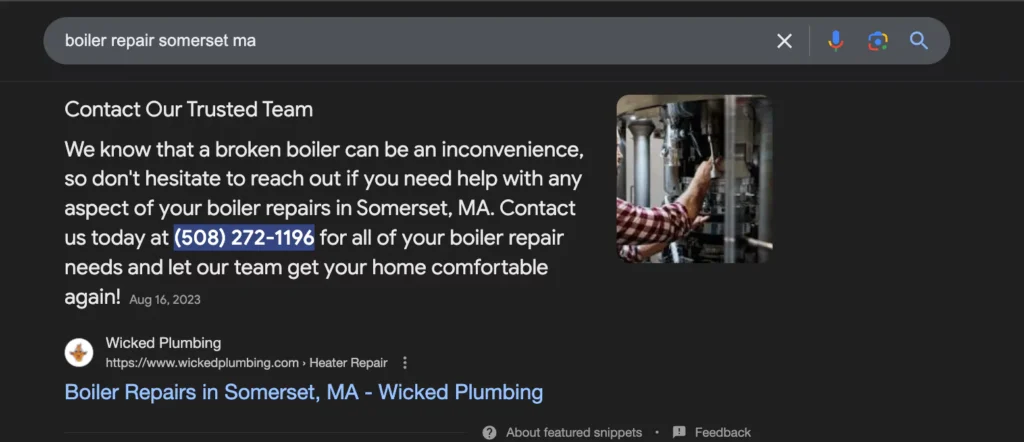
SEO fundamentals like title tags, header tags, URL slugs, and meta descriptions remain integral to ranking on Google.
Ensuring that each website page targets a specific user intent is essential to providing Google and its users with what they seek, and intent-matched pages are what separate top-three rankings from page-two rankings.
Technical SEO
Plumbing business owners shouldn’t be expected to understand the intricacies of technical SEO, but their agency should.
Nothing else you do matters if Google and other search engines cannot crawl and index your website. As a result, it’s essential to cover the technical basics, such as XML sitemaps, canonical tags, SSL certificates, and Google Search Console submissions.

Off-Page SEO
Organic rankings rely not just on on-page signals but also on off-page signals. Citations, consistent listings of your business name, address, and phone number across major directories, distribute credibility to your plumbing domain.
As a local plumber, you want to be listed in all the major directories with a consistent business name, address, and phone number (NAP consistency).
Beyond directories, earned brand mentions strengthen off-page signals: when plumbing suppliers, local news outlets, and adjacent local businesses reference your company because of real work and real relationships, search engines and AI platforms register that consensus.
3) Google Ads
Google Ads generates plumbing leads within days rather than months, at a measurable cost per lead.
Paid search campaigns require a meaningful commitment; plumbing contractors often see average non-branded cost per lead exceed $150, with active monthly ad budgets typically starting at $3,000 to $5,000 to remain competitive in mid- to large metro areas.
Plumbing companies can strategically deploy Google Ads campaigns to complement or jumpstart their broader digital marketing efforts.
Search Campaigns
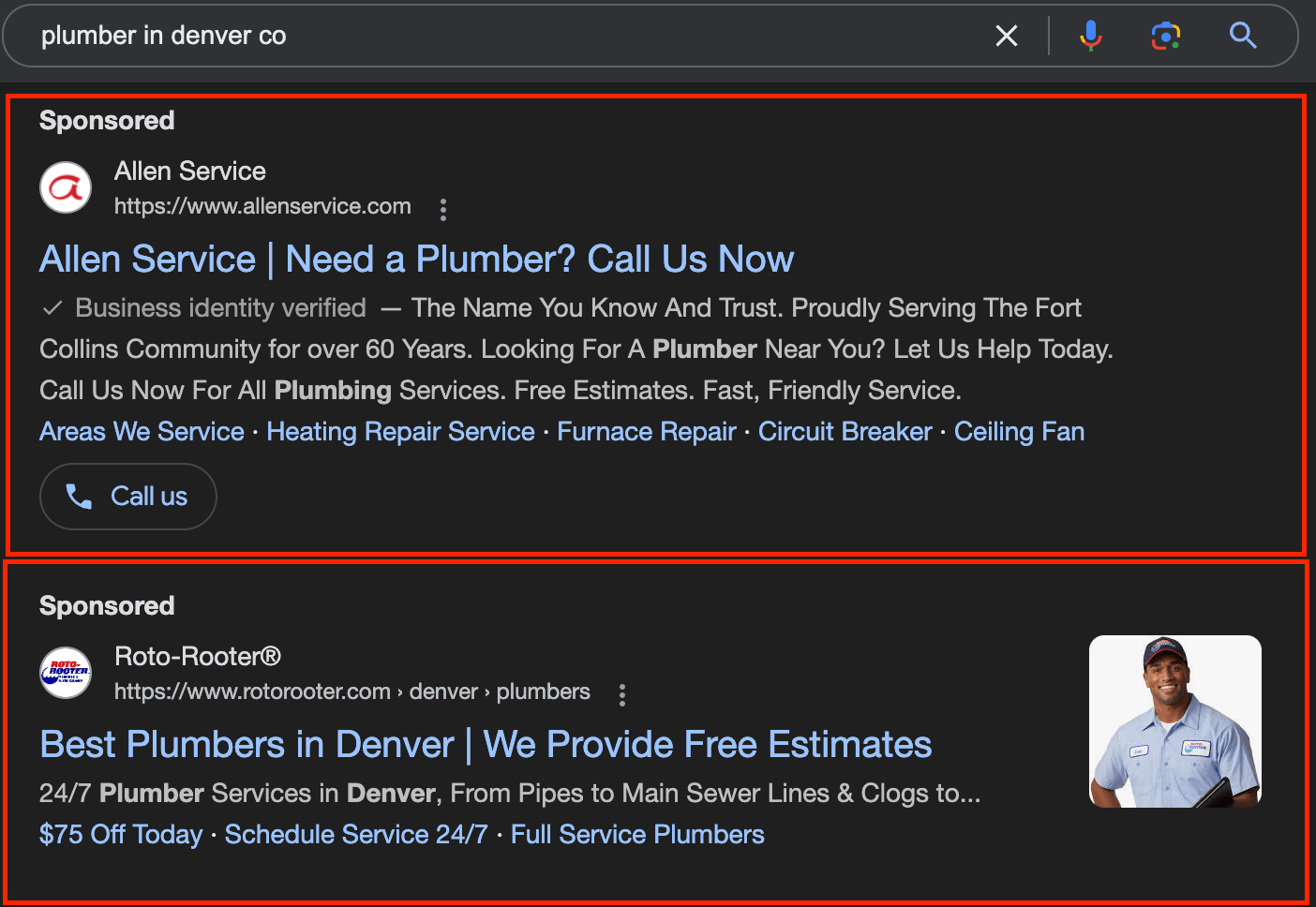
While it can take months to rank in the top 3 organically for your primary keyword, Google Ads search campaigns make you visible immediately.
That immediate visibility, jumping in front of the organic line, comes with a considerable price tag of $150–200+ per lead, something you must weigh against your financial projections and cost-per-lead appetite.
Securing a top-paid position for your chosen keyword term puts you in front of nearby customers on day one.
Local Service Ads
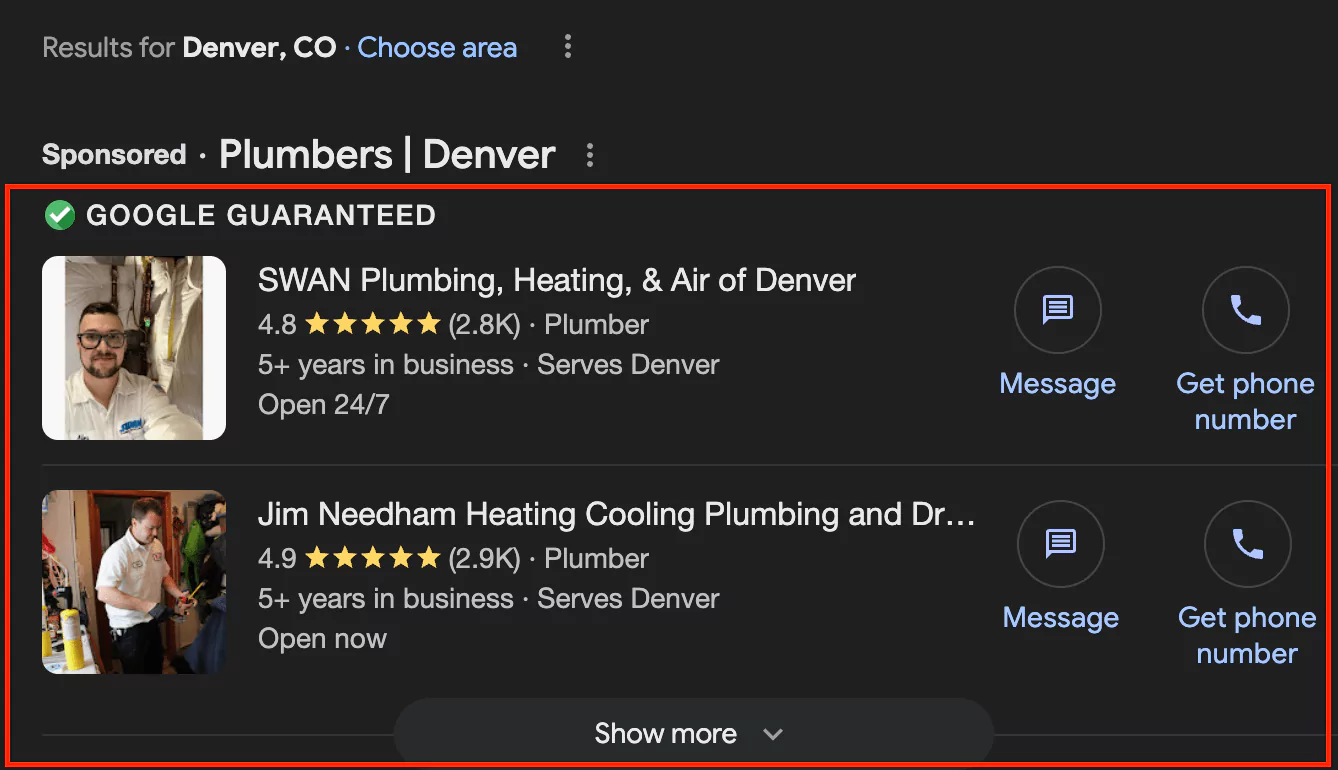
Local Service Ads (LSA), also known as Google Verified, is a unique Google advertising opportunity for plumbers.
LSA ads appear above standard PPC ads at the top of search engine results. Unlike search ads, local service ads utilize a pay-per-lead model, which changes the ROI dynamics.
On average, plumbing LSA campaigns offer a lower cost per lead than traditional search ads. Expect costs to hover around $30 per lead in smaller, less-dense markets, rising to $90 or more in highly competitive metropolitan areas.
Google’s LSA system ensures your plumbing company pays only for qualified leads, though expenses can still add up quickly as the lead qualification process increases the cost per lead.
LSA vs. Google Ads: Which Paid Channel First?
For most plumbing companies, LSA is the first paid channel to deploy: it costs roughly a third as much per lead as non-branded search campaigns and occupies the top position on the results page.
Google Ads search campaigns earn their higher cost when you need to target specific high-value services, such as water heater installation, repiping, sewer line replacement, that LSA’s category targeting can’t isolate.
| Local Service Ads | Google Ads (Search) | |
|---|---|---|
| Pricing model | Pay per lead | Pay per click |
| Placement | Above all results, including PPC | Below LSA, above organic |
| Avg. plumbing cost | ~$30–$90+/lead | ~$150–$200+/lead, non-branded |
| Targeting control | Service categories and zip codes | Keyword-level |
| Best fit | Nearly all plumbers, especially emergency services | Targeting specific high-ticket services |
Benchmark source: Estimated market averages for US plumbing contractors.
Landing Page Optimization
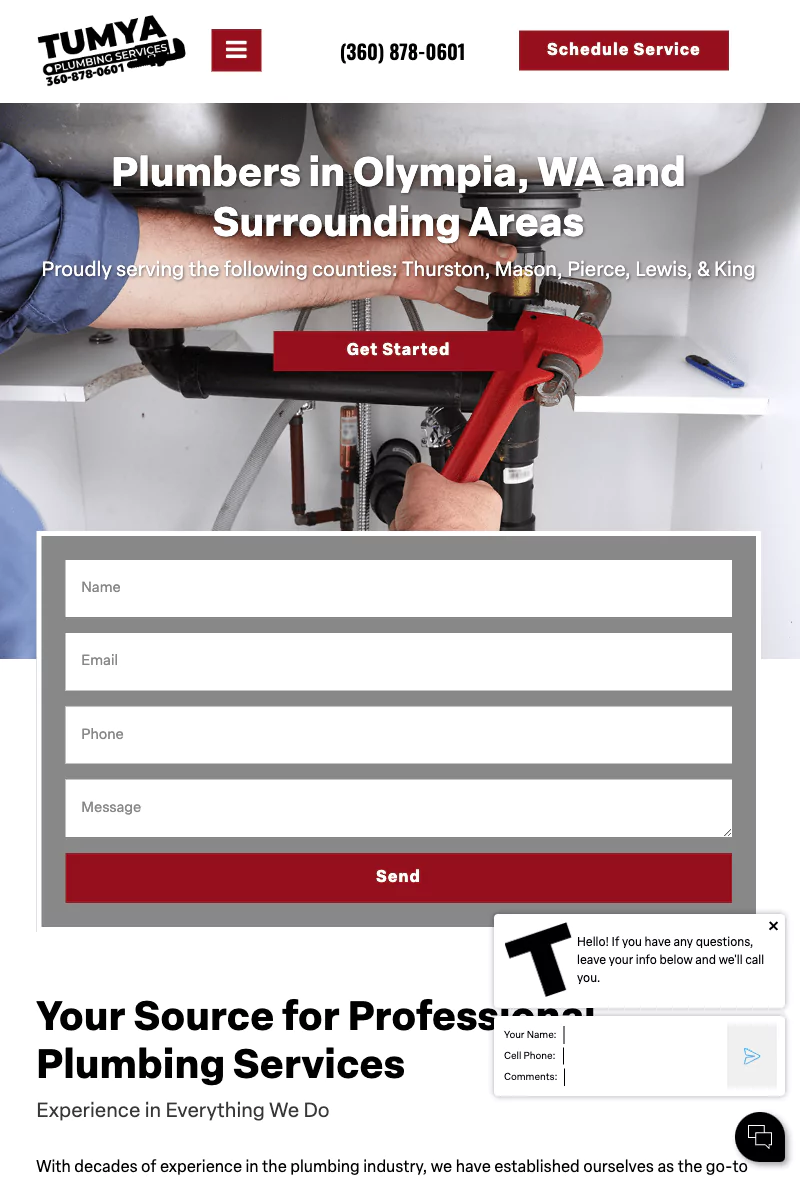
Maximizing the impact of Google Ads relies on landing pages optimized for conversions.
Search campaigns that generate clicks to a specific page will only convert if that page includes a unique value proposition (UVP) and a user-friendly call-to-action (CTA).
Unlike SEO-optimized pages, PPC landing pages should prioritize quick actions to capture as many leads as possible.
When Google Ads Is the Wrong Fit
Google Ads is the wrong fit when your average ticket can’t absorb a $150+ cost per lead, which is common for low-ticket service calls in low-density markets, or when LSA alone already captures your market’s search demand at a fraction of the cost.
4) Social Media Ads
As of April 2026, 5.79 billion people use social media worldwide (DataReportal). That reach makes paid social the widest-awareness channel available to a plumbing company, but social users are scrolling, not searching, which shapes how these ads must work.
While organic posts contribute to your digital presence, paid social ads can break through to users scrolling through their social feeds.
Meta Ads
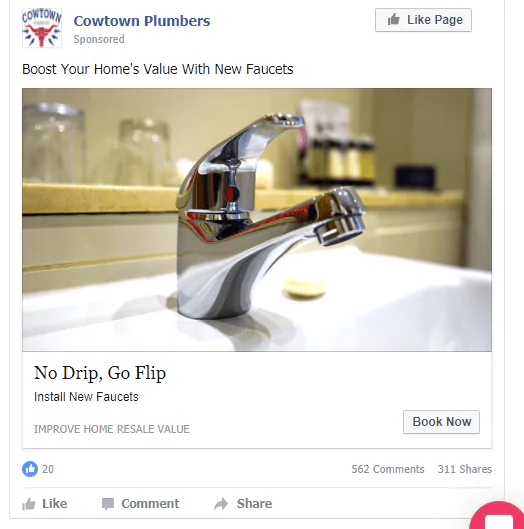
Meta remains the preferred social platform for plumbing ROI, and it has pivoted almost exclusively to its Advantage+ targeting algorithm, which learns users’ behavior in response to your plumbing ad.
Because Advantage+ automates the targeting, your ad creative does the heavy lifting: high-quality videos or photos, paired with engaging marketing copy, determine which users your ads reach.
Running targeted Meta Ads allows you to reach Facebook, Instagram, and WhatsApp users on a single advertising platform.
YouTube Ads
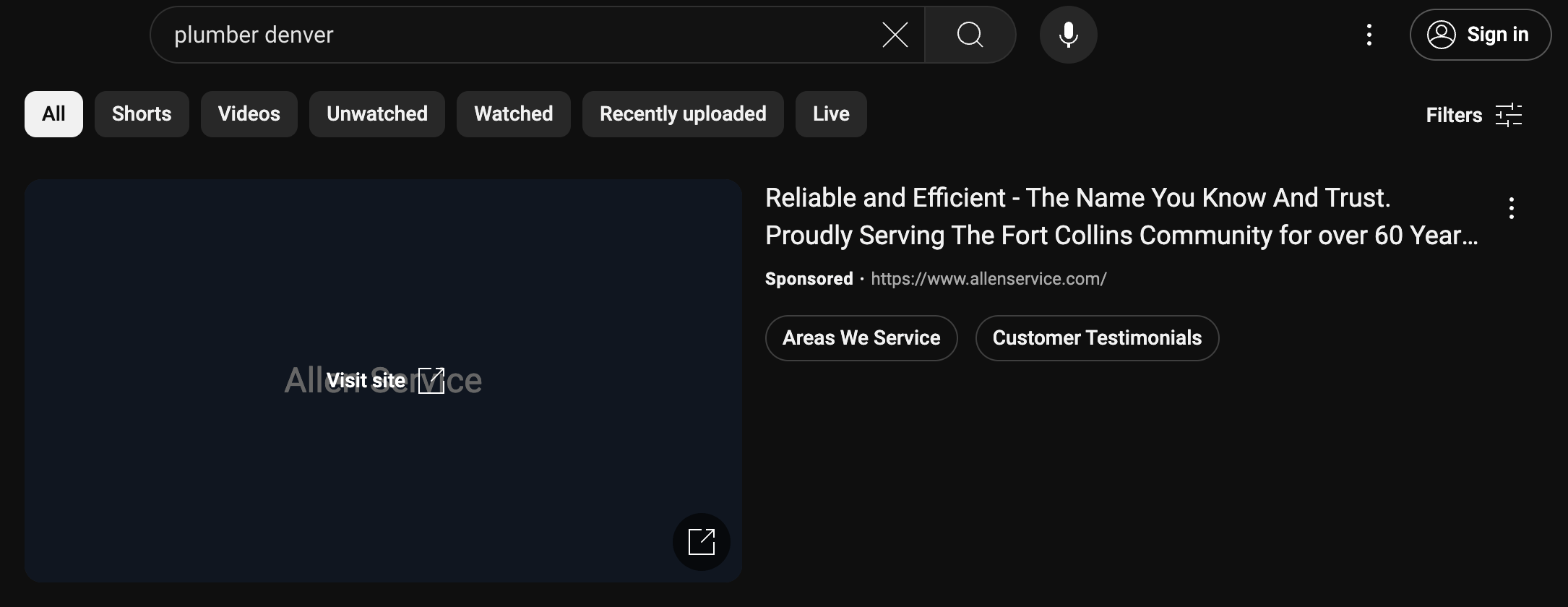
In Google’s connected-TV research, 59% of viewers said YouTube ads on the TV screen are more relevant than ads on linear TV or other streaming apps, a figure Google has reported consistently since 2022 based on a CTV case study by Think with Google (note this is the platform’s own research). With this in mind, plumbers can advertise on YouTube to reach target customers.
YouTube offers various ad types, such as in-stream ads (skippable or non-skippable), bumper ads, shorts ads, and more.
Although non-skippable in-stream ads are effective for brand recall, YouTube Shorts ads have emerged as the most cost-effective way to reach local homeowners.
TikTok Ads
According to the Pew Research Center, 37% of US adults use TikTok, while half of U.S adults aged 18–29 use it daily, representing the youngest cohort of homeowners now entering the market for plumbing services.
Investing in TikTok’s search ads helps your plumbing brand show up when users search for plumbing-related terms on the platform, a behavior more common than most contractors expect.
When Paid Social Is the Wrong Fit
Paid social generates demand awareness, not demand capture. A homeowner with a burst pipe searches; they don’t scroll. If your budget covers only one paid channel, search-side advertising (LSA or Google Ads) converts urgent intent that social cannot.
5) Email Marketing
Email marketing’s lead value for plumbers lives in repeat business: it keeps your company in front of past customers until the next water heater fails.
As of 2025, 93% of consumers check their email daily (ZeroBounce 2025 Email Statistics Report), making the inbox one of the few channels you fully control in terms of delivery.
Modern software enables plumbers to move away from email blasts and toward segmented messages that target specific service types, home ages, and seasonal needs.
Hyper-personalization features allow for far more relevant messaging than old-school email newsletters.
Don’t measure success by open rate. MailerLite’s 2025 benchmarks, drawn from 3.6 million campaigns, put the average open rate at 43.46%, but Apple’s Mail Privacy Protection preloads emails for Apple Mail users, inflating open counts even if no one reads the message.
Measure click-through rate and click-to-open rate instead; those reflect real engagement that personalization, list segmentation, and automation-based campaigns can actually improve.
When Email Is the Wrong Fit
Email is primarily a retention channel, not a cold lead generator. A brand-new plumbing company with no customer list has nothing to email. Build the list through your other channels first, then let email turn one-time customers into repeat ones.
6) Online Reviews and Reputation Management
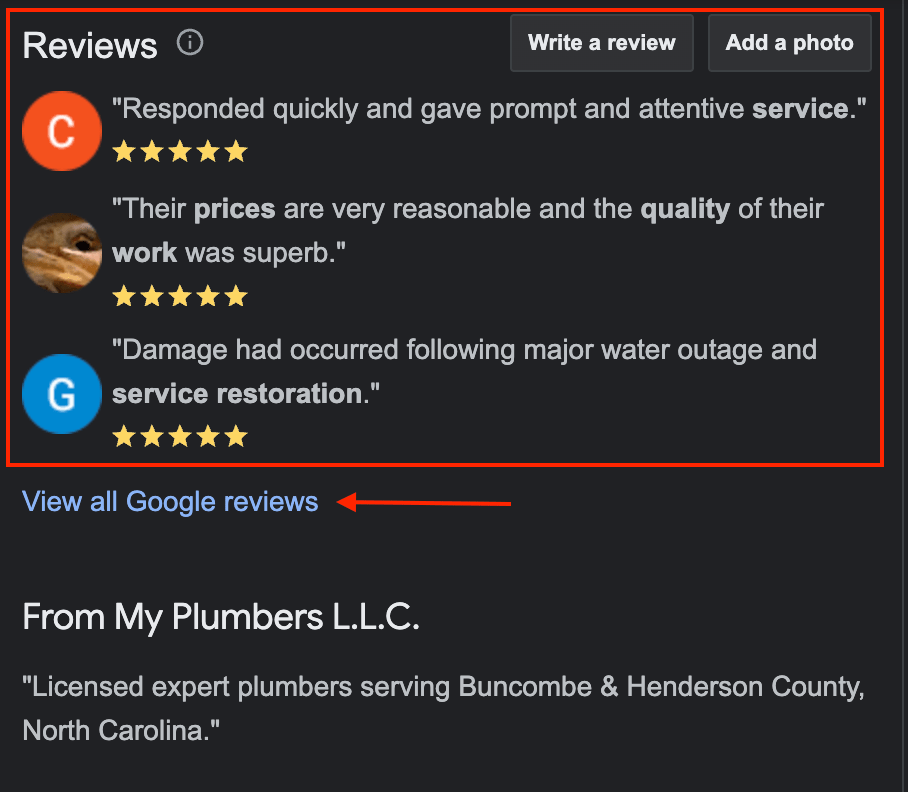
According to BrightLocal’s 2026 Local Consumer Review Survey, 97% of consumers read reviews for local businesses, and 85% of people are more likely to use a business after reading positive reviews. For a homeowner choosing a plumber, your review profile often is the first impression.
Google reviews are particularly impactful for lead generation as they can directly influence Google Maps rankings for plumbers.
The local algorithm now processes review content (e.g., “this plumbing company installed a Rheem water heater in my home”) and uses that to inform rankings for queries such as “Rheem water heater installation”.
Reputation management software with automated review requests can help increase the number of testimonials on platforms such as Google, Yelp, and the BBB.
Pairing two approaches increases review velocity: train your plumbing technicians to ask for reviews in person, and use a modern CRM (such as ServiceTitan or Housecall Pro) to send an automated text message review request the moment the job is marked complete.
Together, the in-person ask and the automated follow-up capture customers at the moment of highest satisfaction.
As your business grows, your listings will inevitably receive some negative reviews. An encouraging professional response will typically appease other consumers as they weigh the pros and cons of the various testimonials.
7) AI Optimization (GEO, AEO)
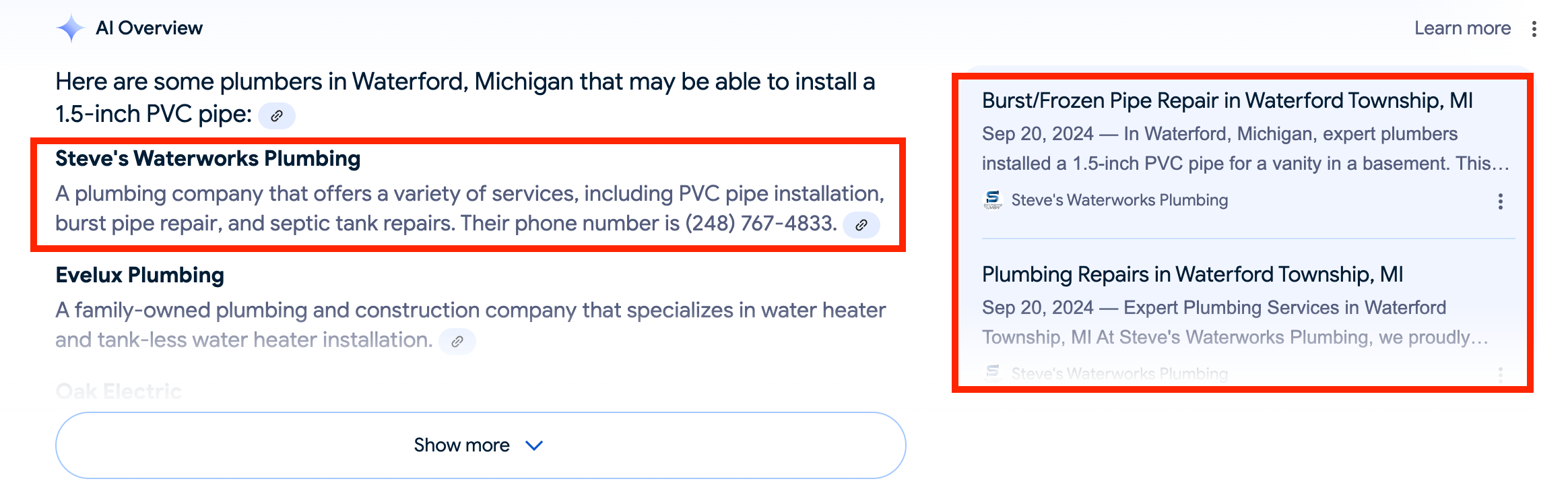
AI has fundamentally altered how homeowners find plumbers. Generative AI platforms drove 1.1 billion referral visits to websites in June 2025, a 357% year-over-year increase, according to Similarweb. A growing share of homeowners now use ChatGPT, Gemini, and Perplexity to find a reliable plumber in their area.
Optimizing for these AI platforms is called Answer Engine Optimization (AEO) or Generative Engine Optimization (GEO). It expands on SEO by focusing on becoming a cited source rather than a “ranked page.”
Google has integrated Gemini directly into search with AI Overviews and has positioned AI Mode as the future direction of Google Search.
According to Google’s Guide to Optimizing for Generative AI Features on Google Search, many of the suggested “hacks,” such as special markup, content chunking, and seeking inauthentic mentions, aren’t effective or supported by how Google Search actually works.
Considering this guidance, the best way to appear in Google AI Overviews and Google AI Mode is to follow SEO best practices and focus on creating valuable, non-commodity content for your audience.
While earning brand mentions across the web (not just on your own website) helps AI assign a meaningful consensus to your brand, it’s crucial that these mentions surface authentically rather than through payments or arrangements that violate Google’s guidelines.
Which Methods Fit Your Business?
No plumbing company should run all seven methods at once. Your starting point depends on your business stage, market, and customer type.
New plumbing companies
Plumbers with no reviews and no domain history should start with Local Services Ads and a complete Google Business Profile.
LSA produces leads within weeks of verification, while SEO takes 4 months to a year to mature, using paid leads to fund the review collection and content investment that eventually replace them.
Commercial and B2B plumbers
Commercial plumbing companies operate on a different playbook than the residential benchmarks in this article.
Commercial leads have slower sales cycles and larger contract values (see the lead-types table above), so relationship channels, commercial-intent service pages, and direct outreach to property managers and general contractors outweigh the velocity of consumer reviews.
The cost-per-lead benchmarks cited here are residential-weighted; expect commercial acquisition to look more like account-based sales than channel marketing.
Rural and small-market plumbers
Rural plumbers benefit from lower competition density: LSA costs run toward the ~$30-per-lead end of the range, and a complete Google Business Profile verified at an address inside your service area can hold the local Map 3-Pack without a downtown storefront (see the service-area tradeoff in Method 1).
Skip metro-oriented tactics like city-page networks; one strong profile and steady reviews carry more weight.
Budget-constrained operators
Companies on a strict budget should exhaust the free stack before spending on ads: claim and complete your Google Business Profile, build NAP-consistent citations in major directories, and systematize review requests after every job.
Those three steps cost labor, not media budget, and they raise the return on every paid dollar you spend later.
Comparing All 7 Methods
| Method | Typical Cost | Time to Results | Best Fit |
|---|---|---|---|
| Local SEO | Labor or agency fees; no per-lead cost | ~3–6 months for map visibility | Every plumbing company |
| Organic SEO | Labor or agency fees; no per-lead cost | 4–12 months | Established companies building durable visibility |
| Google Ads | ~$150–$200+/lead non-branded | Days | Higher-ticket services; metro markets |
| Local Service Ads | ~$30–$90+/lead | Days–weeks after verification | Nearly all plumbers, especially new and emergency-focused |
| Social Media Ads | Varies by market; no published plumbing benchmark | Weeks–months | Brand awareness in competitive metros |
| Email Marketing | Software cost only | Immediate — to an existing list | Companies with an established customer base |
| AI Optimization (GEO) | Labor or agency fees | Months; compounds with SEO | Companies with existing content and reviews |
Cost benchmarks: Industry-standard cost range
Buying Plumbing Leads vs. Generating Your Own
Generating your own leads is the stronger long-term strategy for most plumbing companies; buying leads is a short-term bridge with structural costs.
Buying leads
Buying leads means purchasing inquiries from third-party marketplaces such as Angi or Thumbtack.
Most marketplace leads are shared and sold to 3–5 plumbers simultaneously, which forces a race to the bottom on price and rewards whoever responds first (see the lead-types table above).
The platform owns the customer relationship, sets the price per lead, and can change both at any time.
Generating leads
Lead generation means inquiries arrive through assets you own: your Google Business Profile, your website, your review profile, and your ad accounts.
The benchmarks in this article show what that costs, roughly $30–$90+ per LSA lead and $150–$200+ per non-branded Google Ads lead as of 2026, and every one of those leads is exclusive.
Organic channels go further: once a page ranks or a profile dominates the Map 3-Pack, the marginal cost of each additional lead approaches zero.
When buying leads makes sense: a brand-new company bridging the 4–12-month SEO ramp, an established company filling scheduling gaps in a slow season, or a company testing demand in a new service area. Use purchased leads as a bridge with an exit plan, not as the foundation.
Next Steps for Plumbing Lead Generation
Plumbing leads go to the businesses that establish a digital brand. High-quality leads are not about luck; they are the result of investing in systems that work while you’re under a sink or fast asleep.
Westside Plumbing shows what that compounding looks like. The Fort Worth company joined Plumbing Webmasters in 2016 with virtually no online presence and 5 Google reviews, and grew to 201 Google reviews with a 4.8-star average, serving a 2,800-square-mile area of Greater Fort Worth (per our published case study)
That growth included publishing more than 900 jobsite check-ins through DataPins across its service area.
Your next step is not to purchase leads, it’s to evaluate your foundation and ask yourself:
- Does my Google Business Profile accurately represent my company?
- Is my website crafted to meet Google’s modern standards, or is it using outdated SEO spam tactics?
- Am I distributing authentic brand signals across the platforms where my target customers spend their time?
If these questions are unanswered, you may benefit from working with a lead generation specialist who can help you generate more plumbing leads.

Author: Nolen Walker
Nolen Walker is the founder of Plumbing Webmasters and the creator of DataPins™, a Local SEO platform for plumbing companies. He has over 16 years of experience helping plumbing businesses grow through organic search, Google Maps, and AI-driven visibility.
Nolen is the author of A Complete SEO Guide for the Plumbing Small Business Owner. He also hosts The Plumbing SEO Podcast on Spotify.