Author Archives: Plumbing Webmasters

  • expertise.com best seo agencies in fort worth
  • plumbing heating and air alliance member
  • contractors of america best digital agency

Conversion Rate Optimization for Plumbers (2025 Guide)


Conversion rate optimization for plumbers increases the number of website visitors who complete an action, such as filling out a contact form or clicking a phone number button.

For local plumbers, website conversions are pivotal as they drive qualified plumbing leads to your business through organic SEO, Google Maps optimization, and AI Overviews.

If your plumbing website is not converting at an acceptable rate, it may be time to evaluate how optimized it is for conversions.


I founded HVAC-Plumber SEO Webmasters in 2011, and over the past 14+ years, I’ve learned that attracting website visitors through Google and other sources is only as good as your website conversion rate.

Sending prospects to a website that doesn’t convert wastes your marketing resources and undermines your broader campaign.

In the following guide, I’ll outline how to apply conversion rate optimization (CRO) for plumbers to your business website in 2025.


Conversion Rate Optimization for Plumbers (Guide Cover)

Key Takeaways for Plumbing CRO

  • Invest in a professional plumbing website
  • Implement engaging calls-to-action (CTAs)
  • Highlight your company’s expertise and experience
  • Ensure fast loading times and easy navigation
  • Track your conversions


Benchmarking a “Good” Plumbing Conversion Rate

The average website conversion rate is between 2% and 5%, with 5% or better considered “good.”

So, for every 100 visitors to your plumbing business website, between 2 and 5 will complete an action like filling out a contact form or clicking a phone number button.


Website Conversion Rate Variables

Different traffic sources impact conversion rates, regardless of how optimized your website is for lead generation.

For example, with all things equal, visitors who find your site through an organic Google search are far likelier to convert than those who click on your Google PPC ad.

Other variables also influence conversion rates, which I will list below:


Traffic Source

As I mentioned, traffic sources impact conversions, and organic SEO traffic has the highest conversion rate.

Google Maps clicks to your website also have very high conversion rates, with some studies showing it as up to 80%.

Traffic from plumbing PPC ads typically have low conversion rates, as much as 21x lower than organic visitors.


Screenshot of Website Traffic Source Data from Google Analytics 4

Website Speed

Fast-loading websites naturally convert better than slow ones, and the definition of “slow” has changed significantly over the years.

Today’s website users expect any website to load within 3 seconds, but those that load within 1-second garner the highest conversion rates.

Working with an experienced web developer can enhance your site speed, as can WordPress plugins like WPRocket (for those using WordPress).


Content Type (Blogs vs. Service Pages)

A lesser-known conversion factor is content type (i.e., blog posts vs. location and service pages), which comes into play for most plumbing companies.

Unfortunately, the plumbing SEO industry is ripe with agencies who publish “blog posts” for their clients to drive up traffic without conversions.

Google’s Helpful Content Update warns against “producing lots of content on different topics in hopes that some of it might perform well in search results” as this rarely provides unique value to the user.


As a result, plumbing blog posts can reduce rankings and conversions for your priority keywords while driving vanity traffic for zero-conversion terms.


Content Relevance

Content relevance is another factor impacting conversions, which can also be characterized as “satisfying user intent.”

If your prospect seeks a water heater repair in Denver, CO, a page about general plumbing will not satisfy their unique intent.

While organic Google results are unlikely to produce these relevance overlaps because the algorithm ranks relevant content highest, other sources like paid ads can prompt this issue.


As a result, ensure that the website page you are driving users to matches their intent.


Plumbing Conversion Rate Optimization Fundamentals

As someone with an agency that has produced thousands of plumbing company websites, I know the fundamentals that serve as the baseline for website conversions.

There is no need for a “trial and error” approach when you can learn directly from my 14+ years of first-hand experience with website design.

Below, I will outline conversion rate optimization fundamentals for plumbing companies in 2025:


Calls-To-Action (CTAs)

A call-to-action is a button or statement encouraging the website visitor to take a specific action.

A plumber CTA might be a button that links to a contact form submission or a clickable phone number that allows mobile visitors to call your business number directly from the website.

Without CTAs, conversions will be minimal, so ensure you understand CTAs and how to implement them into your design.


Screenshot of Plumbing CTA Examples from Business Website

Company Branding

An overlooked conversion principle for plumbing companies is branding, as visitors won’t invest in an unknown entity.

Consequently, displaying your company name, logo, phone number, and address is essential for conversions.

It also helps you link to your other digital assets, such as your Google Business Profile, Facebook Business Page, and YouTube channel.


Site Security

A website SSL certificate is essential to driving website conversions in 2025. Any non-secure website (HTTP) will show a warning in most browsers.

As a result, users who navigate to a non-secure website are unlikely to see the content and, therefore, will never convert.

Most hosting providers make it easy for plumbers to add an SSL certificate to their domain, but you can work with a professional web design agency for assistance.


Social Proof

Content that showcases your real-world value is the most beneficial to conversions on a plumbing business website.

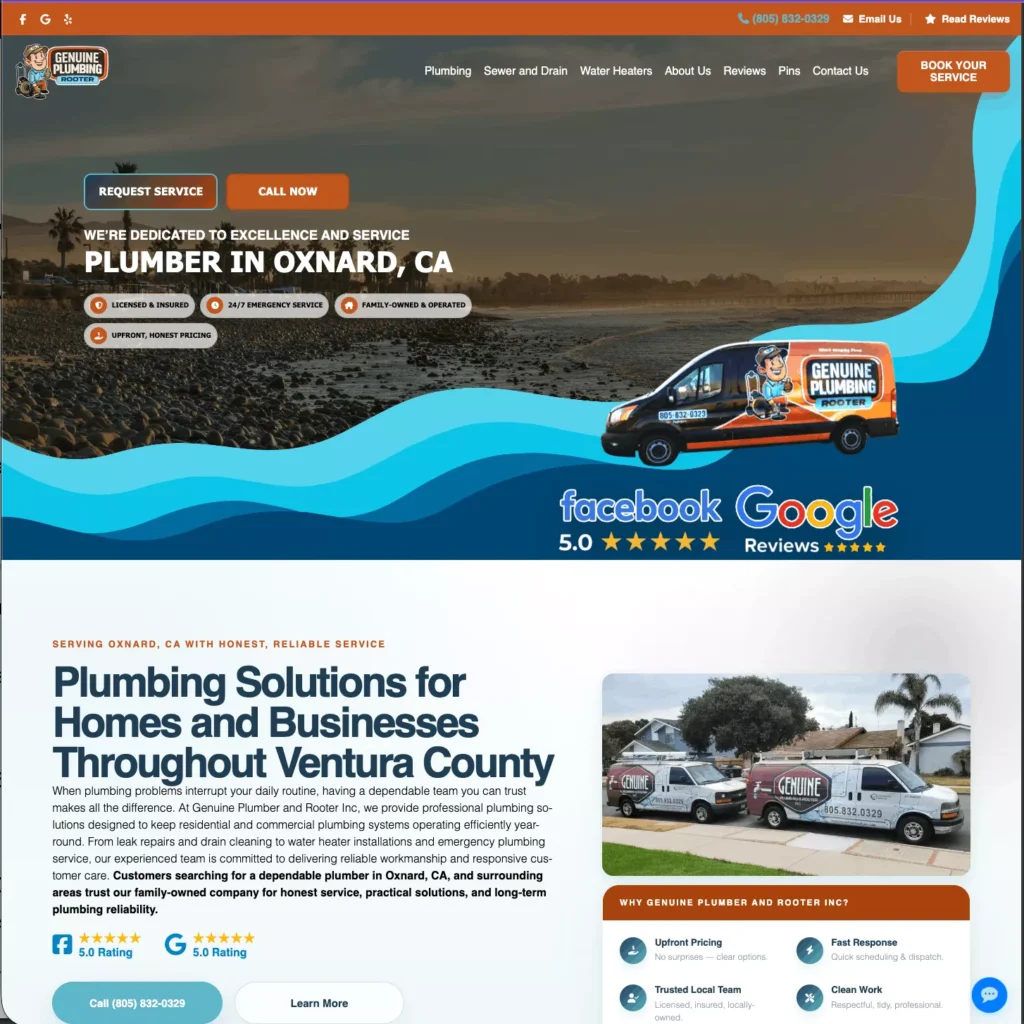
Yes, SEO optimizations are necessary, but showing images of your recent jobs, your plumbing license number, your reviews, and award badges will drive actions from visitors.

At least some of your social proof must be visible “above the fold” on mobile or desktop browsers without having to scroll down.


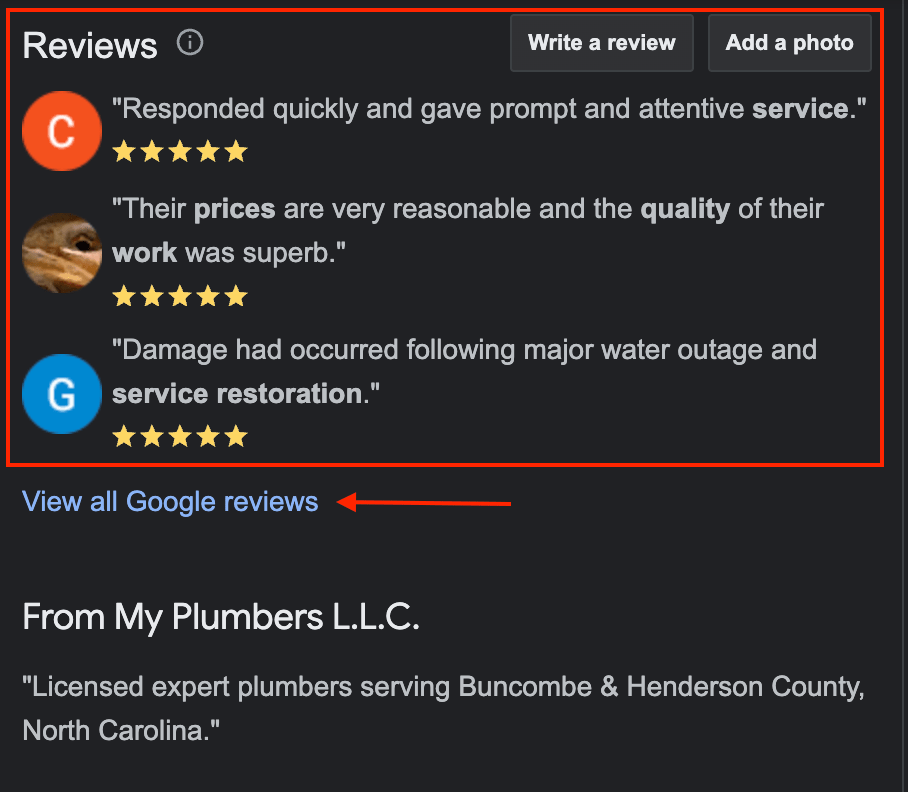
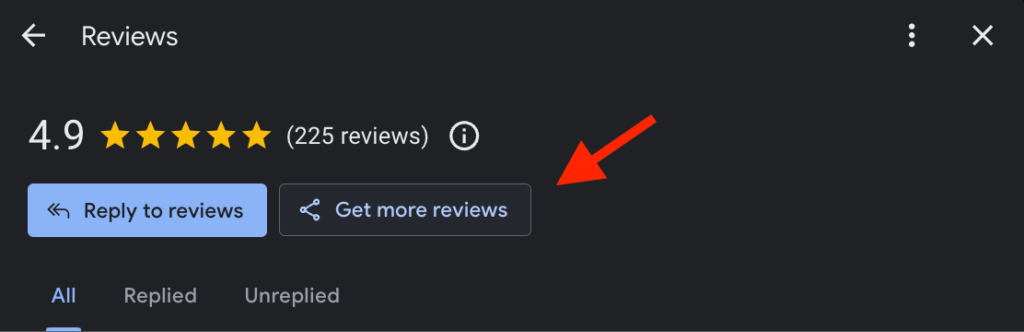
I recommend using a reviews slider plugin that showcases Google and Yelp reviews through an API so users can trust the source.


API Review Slider Plugin Screenshot from Plumbing Website

Website Accessibility

Another CRO fundamental for plumbing contractors is website accessibility, which means people can quickly access your website and read and engage with the content.

Factors like text size, font, and user navigation all affect accessibility, and experienced designers understand how to make this a priority.

Accessibility must expand across all device types, from mobile to desktop and tablet and everything in between. Responsive web design (RWD) allows websites to adapt to the device they are accessed.


Tracking Plumbing Website Conversions

Tracking an entire conversion funnel is not always straightforward, as a visitor’s origin can span various mediums, from organic search to social media marketing. 

However, tracking conversion rates as much as possible is crucial to improve the pages or sections with lower conversion rates.

Below, I will list some of the ways you can track plumbing website conversions in 2025:


Google Analytics

Google Analytics 4 allows plumbing companies to mark specific events as conversions, which can then be tracked and evaluated through the tolls native conversion report.

Visits to a Contact Us or Thank You page are easy to mark as conversions because their URL is already tracked within the GA4 platform.

Plumbers can also create custom events for specific CTA buttons, including click-to-call phone numbers.


Google Tag Manager

More advanced conversions like form field interactions require Google Tag Manager integration with GA4.

GTM is also useful for “conditional conversions,” which require the user to perform prerequisite events before counting their action as a conversion.

Properly setting up Google Tag Manager is more complex than tracking conversions straight from the GA4 platform, so it will likely require professional assistance.


Heat Mapping

Plumbers looking for more granular conversion data may want to invest in heat mapping software that displays visitors’ website behavior in color-coded format.

For example, clicking on a specific part of a webpage will showcase red dots, while scrolling to a different page section will showcase blue dots.

Heat maps capture information beyond the scope of Google Analytics or Google Tag Manager, allowing plumbing web designers to pinpoint the precise areas for improvement.


Tips to Improve Your Plumbing Website Conversion Rates

There are many things local plumbers can do to increase their website conversion rates. Over my 14+ years of first-hand experience working with plumbing companies, I have the data and expertise to understand what tweaks help boost conversions and, ultimately, plumbing leads.


Enhance Calls-To-Action (CTAs)

A call-to-action, or CTA, is more than just a button that says, “Click here.” It is a psychological mechanism that encourages website visitors to take action.

As relayed in my plumbing marketing statistics, red CTA buttons outperformed other colors in research.

The placement of CTAs is also proven to impact their click-through rates, as those visible “above the fold” foster the most engagement.


Users who have to scroll down your pages to find a call-to-action are less likely to click them than if they are embedded into your website header.


Demonstrate E-E-A-T

My recent podcast outlines the importance of expertise, experience, authority, and trust (E-E-A-T) to Google rankings in 2025, but its impact expands to conversion rates.

Users who feel your plumbing company is an expert with first-hand experience and authority and can be trusted are far more likely to convert.

You can use a tool like DataPins to enhance your website’s E-E-A-T by showcasing recent plumbing jobs.


You can also include your plumbing license number, award badges, and original photos of your truck and staff.


Integrate Reviews on Your Website

While reviews are also part of E-E-A-T, they are worthy of their own category for conversion rate optimization.

Many plumbers make the mistake of either not showing reviews on their websites or adding screenshot images of Google or Yelp reviews to their websites.

Images can be doctored easily, especially in the era of artificial intelligence and deepfakes.


Consequently, it’s essential to use a review slider plugin that pulls your reviews through API from credible third-party platforms like Google, Yelp, and Facebook.


Reduce “Friction” on Contact Forms

Website visitors are less likely to complete contact forms with more than three fields. Plumbing companies sometimes purposely add four or more fields to weed out bad leads.

Adding more fields to your contact form is known as “friction” because it generally increases the quality of your leads.

However, this comes at the expense of some qualified leads slipping through the cracks.


Plumbing companies that invest in organic SEO should reduce friction on their contact forms since most SEO leads are high-quality and do not require additional filtering.


Embed YouTube Videos on Your Website

Embedding videos on your plumbing website pages can increase conversions by 86%.

I recommend embedding YouTube videos as these are eligible to rank in Google SERPs and can send more traffic to your website from multiple sources.

As a local plumber, you can create video content using your smartphone and a simple editing tool like iMovie.


You can create an introduction video with your staff and specific videos for each service you provide.


Showcase Unique Value Propositions (UVPs)

Visitors who view your company as a run-of-the-mill plumbing company are less likely to take action.

If they see your website as spammy or untrustworthy, they will likely exit it quickly.

You need unique value propositions (UVPs) to stand out from competitors.


Examples of UVPs for plumbers include:


  • Local Expertise
  • Real-Time Trust Signals
  • Fast and Easy Scheduling
  • Emergency Readiness
  • Transparent Pricing
  • Licensed & Insured Plumbers
  • Eco-Friendly Solutions
  • SEO-Driven Design

Prioritize User Experience

Even with proper UVPs and CTAs, low conversion rates can still result from poor user experience (UX).

Factors like website navigation (desktop, mobile, and all devices) heavily impact your final conversion rate percentages.

Ensure your plumbing website design is crafted specifically for your users and is easy to navigate on mobile devices with smaller screen sizes.


An experienced plumbing web designer is less concerned with “wow factor” design elements and more about ease of use, leading to conversions.


Final Thoughts on Conversion Rate Optimization

As the founder and CEO of Plumbing Webmasters – a digital marketing agency for plumbers, my agency has designed thousands of websites for local contractors.

While driving visitors to the website from Google, AI, and other sources is essential, none of it matters if the website does not convert at an acceptable rate.

While the average website conversion rate is between 2% and 5%, my clients’ websites are optimized to outperform these averages.


My experienced web design team has honed their skills in the plumbing website space, where nuances make all the difference in conversions.

My agency prioritizes user experience, navigation, CTA placement, and E-E-A-T signals to generate legitimate prospects for your business.

To discuss my 14+ years of first-hand experience with conversion rate optimization for plumbers, call my personal cell phone at (877) 388-9884.


Posted: | Updated: Jan 8, 2025 | Categories: Uncategorized
  • expertise.com best seo agencies in fort worth
  • plumbing heating and air alliance member
  • contractors of america best digital agency

Google Ads for Plumbers: The 2025 Guide (w/Best Practices)


Google Ads for plumbers is one of the most widely utilized digital marketing channels for local plumbing companies nationwide.

Plumbing business owners gravitate toward Google Ads because it is the fastest way to acquire plumbing leads and new customers.

While SEO is proven to generate a higher conversion rate and ROI when properly executed, it takes several months of careful optimization to produce tangible results.


Meanwhile, Google Ads and PPC advertising can produce new plumbing prospects immediately.

One challenge for local plumbers is identifying which Google Ads format will yield the best results in their respective markets.

Depending on the size and scope of your company, your ad spend budget may be limited or significant.


As the founder and CEO of Plumbing Webmasters – a digital marketing company for plumbers, I’ve worked with thousands of business owners on advertising for plumbing companies.

Below, I will outline the different Google Ads categories and variations and provide


Google Ads for Plumbers (Guide Cover)

What are Google Ads for Plumbers?

Google Ads for plumbers are paid advertisements that appear on one or more of Google’s platforms. Plumbing companies’ most common Google Ad types are search ads, local service ads, and display ads.


Search Ads

Google search ads emulate organic search results and appear at the top of search results for specific keywords.

Search ads appeal to plumbers because they allow them to automatically appear in search results for plumbing-related keywords that are known to drive conversions.

While fewer people click on paid ads than the top organic results, search ads can still garner over 3% of clicks.


Google Ads PPC Screenshot for Emergency Plumber

Local Service Ads (LSA)

Google’s local service ads (LSA) differ from search ads because they use a pay-per-lead model instead of pay-per-click.

As a result, plumbers only pay for LSA clicks that result in a legitimate customer inquiry. Considering this, the return on ad spend (ROAS) is typically higher than that of search ads (though it depends on market conditions).

Still, the cost per lead from LSA ads can vary significantly by market, with the average range spanning $5-$150 per lead.


Plumbing LSA Ads

Display Ads

Google display ads reach a broader audience than either search or local service ads because they appear across Google’s display network, which includes platforms like Gmail and YouTube.

Because display ads generate more impressions, they generally yield a lower click-through rate than other ad types, with an average CTR of under 1%.

However, display ads also generally cost less than search ads and can be used in remarketing campaigns to retarget website visitors and others who’ve previously interacted with your brand.


Plumbing Display Ad Example

Setting Up a Plumbing Google Ads Account

The first step in setting up your account is defining your budget and campaign objectives. You cannot enjoy success unless you set benchmarks for your goals through Google Ads.


Below, I will walk you through the process of setting up a Google Ads account:


Creating an Ad Campaign

Log in to your Google account and navigate to https://ads.google.com/home/.

Click “New Campaign”


Choosing an Ad Objective

A screen with different objectives will appear that includes:


  • Sales
  • Leads
  • Website Traffic
  • App Promotion
  • Awareness and Consideration
  • Local Store Visits and Promotions
  • Create a Campaign Without a Goal’s Guidance

After selecting an objective, you will be taken to another screen.


Choosing a Campaign Type

Now, you will be prompted to select your campaign type out of these choices:


  • Search 
  • Performance Max
  • Display
  • Shopping
  • Video
  • App
  • Smart
  • Hotel
  • Demand Gen

Choosing Target Results

Now, you will be prompted to “select the results you want from this campaign” by either checking or not checking boxes next to the following options.


  • Website visits (with a field for your URL)
  • Phone calls (with a field for your phone number)
  • App downloads

Naming Your Ad Campaign

Next, you will be prompted to name your ad campaign, something like “Local Plumbing Services – Search Campaign” or anything that helps you distinguish this ad campaign from others.


Selecting Your Ad Networks

You will now be presented with checkboxes for the following ad networks:


  • Search Network
    • Include Google Search Partners
  • Display Network
    • Include Google Display Network
    • Use Display Expansion

Most plumbing ad campaigns select the search network while leaving the other boxes unchecked, including “include Google search partners.”

Checking the “include Google search partners” box expands your ad’s reach to other search engines like Ask.com and Dogpile.com, though you cannot see exactly where it is distributed.


Selecting a Target Audience

Your location settings allow you to select your target city (i.e., Fort Worth, TX) where your ad will be shown.

Select “enter another location” and search for your target city.

Alternatively, you can select the entire United States as your ad’s target audience, but that would be a waste of money.


Choosing an Audience Segment

Next, you can choose from pre-existing audience segments via the search tab or create a new one by clicking “New Segment.”

Several plumbing-related segments already exist, such as Plumbing services and Plumbing Fixtures, which you can add to your campaign.

The bottom of this screen will provide two options for targeting settings, which are:


  • Targeting: Narrows your ad’s reach to only your selected segments
  • Observation: Don’t narrow the reach of your campaign

Google recommends selecting Observation as it allows its advertising algorithm to reach more potential customers. 


Setting an Ad Budget

Google Ads calculates budgets by a daily limit rather than monthly or weekly. As a result, I recommend being conservative with your initial daily ad spend.

PPC ads can quickly drain your budget, and you will regret your investment if you don’t optimize your conversions correctly.

I recommend a daily ad spend of $10-$50 for novice plumbers.


Choosing a Bidding Priority

Next, you will choose a bidding priority from a dropdown menu that includes:


  • Clicks
  • Leads
  • Cost Per Acquisition
  • Conversions
  • Return on Ad Spend
  • Cost Per Click
  • Conversion Value
  • Impression Share

You will also see a checkbox to set a maximum cost-per-click bid limit. Beneath that, you will see another checkbox to bid for new customers only.


Including Ad Assets

Next, you can add “ad assets” to your campaign, which can consist of the following:


  • Sitelink Assets
  • Call Assets
  • Location Assets
  • Callout Assets
  • Structured Snippet Assets
  • Image Assets
  • Promotion Assets
  • Price Assets
  • Lead Form Assets
  • Affiliate Location Assets
  • Mobile App Assets
  • Hotel Callout Assets

Google Ad Groups for Plumbers

Once your initial settings are configured, you can set up your Ad Groups within the Google Ads platform.

Ad groups are related advertisements that navigate to a shared landing page. Considering this, grouping ads based on associated services like clogged rain repair, sewer line repair, and hydro jetting is ideal.

During the ad group set-up, you will be prompted to select keywords for which ads in this group will appear in search results.


Google provides a native keyword tool to generate terms and phrases; you can edit and refine this list.

Keywords can be added or removed at any point in your campaign.


Setting Up Final URLs

A Final URL is a term Google uses for your landing page, which you should enter as an HTTPS URL. An HTTP URL will prompt a warning because it is considered “non-secure.”

Considering this, your landing page must be hosted on a domain with an SSL certificate to serve an HTTPS URL.

Remember that your landing page is where the user will go after clicking on your ad, so make sure it is relevant.


Additionally, Google will ask for a “display path” for the URL, which will appear to users. 

You want your display path to be simple and topical, so users know they are navigating to a relevant page.


Creating Headlines

Google recommends at least three headlines per ad campaign, but sometimes more is warranted.

Headlines are restricted to 30 characters, and plumbing ads work best when all or most of this space is occupied. Make sure to use title case in each headline.

Your headline should emphasize specific keywords, services, and a unique value proposition differentiating your ad and company from competing promotions.


Writing Descriptions

Google recommends a minimum of two descriptions per ad, highlighting your company’s expertise, experience, authority, and trust.

Examples of inserting E-E-A-T into your ad descriptions are quantifying how many customers you’ve served or highlighting how many years your company has been in business.

The goal is to demonstrate your company’s credibility to potential customers quickly.


Complete Billing Information

Finally, you will be prompted to enter your billing information, at which point you can officially launch your plumbing Google Ad.


Measuring Conversions

Once your ad has been running for 24 hours or more, I recommend monitoring its performance to maximize its ROI.

You can evaluate metrics such as clicks, click-through rate (CTR), conversions per click (CPC), impressions, and revenue.

You can use the +Conversions feature by clicking “Tools and Settings” at the top of the menu.


You will be prompted to select what kinds of conversions you want to track, with a choice between:


  • Website
  • App
  • Phone Calls

Next, you will name your conversion for a plumbing service ad: something like “Quote Request.”

In the value section, you can select from three options:


  • Use The Same Value for Each Conversion
  • Use Different Values for Each Conversion
  • Don’t Use a Value for This Conversion Action

Most plumbers select the first option and then enter a USD value to assign to that conversion action.


Selecting Google Ads Keywords

Plumbers can add and edit campaign keywords from the Google Ads campaign homepage.

You are not bound to your original selections, so you can update your keywords at any point in the campaign.


  • Select “audiences, keywords, and content on the left side of the menu.”
  • Select “Search Keywords”
  • Click the + button

From here, you will be taken to the Google keyword generator, where you can add keywords.


Exact Match Keywords

Exact match keywords are self-explanatory in that they prompt your ad to show up ONLY when the user searches for the exact term or phrase, such as “sewer line repair” or “burst pipe repair.”

Inserting your keywords in brackets tells Google that the term or phrase is an exact match.

For example:


[sewer line repair]


Negative Keywords

Negative keywords tell Google not to display your ad for specific terms and phrases. These help you optimize your budget by eliminating ad spend on terms or phrases you know won’t result in new customers.

Inserting the minus sign before the term or phrase signals to Google a negative keyword.

For example:


-diy plumbing repair


Landing Pages

Landing pages are where the user goes after clicking on your ad. Considering this, your landing page should match the topic of the ad and encourage the user to request a quote.

I recommend designing a specific landing page for each service type, like emergency plumbing services, hydro jetting, garbage disposal repair, etc.

Some plumbing companies make the mistake of sending every click to their website homepage, which lowers conversion rates due to a lack of specificity.


You can include a noindex tag on your landing pages so that they don’t cause keyword cannibalization within your SEO strategy.

The qualities of a strong PPC landing page include:


  • Clear and Relevant Copywriting
  • Immediate Loading
  • Simple Navigation
  • Clear Privacy Policy

The quality of your landing page can determine the success or failure of your entire ad campaign, so you should invest the necessary time and resources into perfecting it.


Plumbing Landing Page Example 6

Plumber Google Ads Tips For Successful Campaigns

You can follow the step-by-step Google Ads guide for plumbers, but you still may not fully comprehend the nuances of a successful ad campaign.

While some larger plumbing companies spend ad money haphazardly, most plumbers are relatively careful with their ad spend.

Considering this, learning my tips and suggestions, based on 10+ years in the digital marketing industry, can help you avoid common PPC pitfalls and maximize your Google Ads ROI.


Check out my plumbing Google Ads tips below:


Exclude Keywords Based on User Intent

Understanding user intent empowers plumbers to select a long list of negative keywords, which would have wasted money if left off the list.

Any keywords with informational intent should be added to your negative keywords list because the user is not looking for a service.

Furthermore, navigational keywords like queries that include “YouTube” represent users seeking content on a specific platform other than yours.


Restrict Your Ad Location

Google Ads can quickly drain your marketing budget, so I recommend restricting your ad targeting to specific locations.

As a local plumbing company, homeowners outside your service area are of no value to your business, so serving ads to them is a waste of resources.

You can restrict your targeting locations with radius targeting (drawing a circle around your service area), manual city insertions, or postal codes.


Track Leads from Google Ads

Google Ads provides a call tracking feature for plumbers to see which keywords generate phone calls.

Whether you use Google’s native tracking platform or not, tracking leads generated from Google Ads is vital so you can compare them to prospects from other mediums.

Capturing this data will reveal that Google Ads cannot sustain an ROI on the level of SEO but that short-term campaigns can help spark your broader marketing efforts.


Utilize Ad Extensions

Google offers Ad extensions for free so you can expand the size of your search ad on SERPs.

Sitelinks and phone numbers are standard ad extensions for local plumbing companies, allowing them to add other useful links to their ads.

Including relevant ad extensions can increase your ad quality score, prompting Google to showcase your ad in a more prominent part of the SERP.


A/B Test Your Ad Copies

Google Ads testing is the most effective way to improve its performance over time.

However, plumbers often make the mistake of A/B testing two entirely different ads with their own unique copy, images, and CTAs.

A successful A/B test is a single-variable test in which you merely test a specific component of the same ad (and nothing else).


Create a Dedicated PPC Landing Page

PPC landing pages should heavily prioritize conversions, which slightly differs from the ideal website page optimized for SEO.

Considering this, I recommend creating a dedicated landing page for your Google Ads campaigns.

These landing pages will feature a noindex tag so that they won’t be indexed by Google in organic search results, preventing keyword cannibalization.


Integrate Google Ads With SEO

Running Google Ads as a standalone marketing campaign is its worst use case. 

The most successful plumbers I’ve worked with integrate PPC with a broader marketing effort, specifically SEO.

Running Google search ads can help increase brand recognition, but this only benefits your business if you’ve established a website and Google Business Profile that reflect your brand’s best qualities.


Final Thoughts on Plumber Google Ads

Google Ads can be an impactful way for plumbing companies to generate leads in 2025.

After learning the various ad formats, targeting options, and budget control measures, plumbers can follow best practices to maximize their Google Ads campaigns.

As the founder and CEO of Plumbing Webmasters, I’ve worked with thousands of plumbing contractors on digital advertising campaigns.


While organic SEO produces a higher ROI and a sustainable business model for consistent lead generation, Google Ads is a useful short-term tactic to integrate within a broader marketing effort.

Still, local plumbers should be vigilant about not overspending on Google Ads, as they can quickly drain their budget and set back their business goals.

Nevertheless, when handled correctly, Google Ads remains a potent lead generation method.


To discuss my 10+ years of experience with Google Ads for plumbers, call my personal cell phone at (877) 388-9884.


Posted: | Updated: Jun 24, 2025 | Categories: PPC
  • expertise.com best seo agencies in fort worth
  • plumbing heating and air alliance member
  • contractors of america best digital agency

How Plumbers Can Choose The Perfect Domain Name


Choosing the right plumbing domain name is essential to building a digital brand and generating qualified local leads.

As the founder and CEO of Plumbing Webmasters – a digital marketing agency for plumbers, I’ve helped thousands of companies select the ideal domain name for their plumbing websites.

Based on my first-hand experience and expertise, the best domain names are concise, topical, and branded.


Qualities of an Ideal Domain Name for Plumbers

  • Short and Concise
  • .com Domain Extension
  • Brand Relevant
  • Topically Relevant (Plumbing, Plumber, etc.)
  • Original (Not Trademarked)

Plumbing Domain Name (Blog Cover)

Keep Your Domain Name Concise

An ideal character length for a plumbing domain name is between 6 and 15 characters. A concise domain name is simpler to recall, share, and promote on marketing materials like truck wraps.

Balancing conciseness with other factors like topic, brand, and location can significantly challenge plumbing business owners.

A good rule of thumb for local plumbers is to avoid going over the 20-character mark, as names of this length can lead to a loss of traffic due to their lack of user-friendliness.


Choose a .Com Domain Extension

The .com extension is the most popular, resulting in the fewest available names. However, just because your preferred .com is taken does not mean you should take the .net or .org alternative.

Instead, you should choose the best available .com extension, as the .com evokes trust from internet users from a plumbing marketing perspective.

You are better off using your second or third name choice in a .com domain rather than settling for your first choice with a .net domain.


Plumber Domain Name Breakdown

Select a Branded Domain Name

Your plumber domain name is part of your digital brand, which my agency has identified as the key to unlocking digital marketing success.

As a result, it is essential to fit some version of your company name within your URL. If you pick a name with zero references to your brand, you hurt your business in multiple ways.

First, other marketing channels will not correlate with your website, confusing potential customers. Secondly, website visitors are less likely to remember your brand if it is not in the domain.


Some companies make the mistake of choosing an exact-match domain like “miamiplumber.com,” thinking this will help them rank higher for the keyword and generate more customers.

Unfortunately, this strategy yields the opposite effect, as consumers cannot associate your brand with a unique name on SERPs and confuse your company with other local plumbers.


Prioritize a Topically Relevant Domain

While exact-match domain names rarely lead to sustained marketing success for plumbers, keywords within your domain name can provide an SEO advantage.

For marketing purposes, the keyword is more about the topic than the term itself. For example, it’s best to have plumber or plumbing in your domain name that is COMBINED WITH your unique brand identifier.

You can gain a further advantage by including your location within the name, but at some point, the name becomes too long to be worth that advantage.


With Location – jimbobsdenverplumbing.com

Without Location – jimbobsplumbingco.com


Weighing the pros and cons of these domain factors will lead you to the ideal domain name.

I personally recommend focusing more on your brand identifier (with the topic) than trying to shove your location into the name.

My agency helps plumbing companies build a sustainable digital brand, which is a long-term investment.


Ensure Originality and Avoid Trademarks

Originality is a critical component of branding in general. You would hate for your plumbing company to be confused with something else.

Additionally, if your domain name resembles a trendy brand, it will likely get buried in Google search results.

I’ve seen cases where Google confuses plumbing companies with nearby competitors because of similar names.


In the worst-case scenario, plumbers might accidentally purchase a trademarked domain name, which could result in legal action from another entity.

Before purchasing a domain name, you should search the trademark database from the United States Patent and Trademark Office.


Good Domain Name Examples

joesplumbingdfw.com
chetsplumbingco.com
txplumberguys.com

Bad Domain Name Examples

cheapplumbingny.net
miamiplumbers.net
davescompany.net


GoDaddy Domain Search (Screenshot)

Source: GoDaddy


Final Thoughts on Domain Names for Plumbers

Don’t overthink it; check all of the boxes and keep it simple. Remember, your domain name is part of your digital brand, so it should include your brand identifier and industry.

Follow these guidelines, and you will be on your way to creating the perfect plumber domain name.

Some hosting platforms provide alternative recommendations for unavailable domain names.

At Plumbing Webmasters, our web designers and SEO specialists help you craft the perfect domain name.


Posted: | Updated: Nov 12, 2024 | Categories: Uncategorized
  • expertise.com best seo agencies in fort worth
  • plumbing heating and air alliance member
  • contractors of america best digital agency

34 Eye-Opening Marketing Statistics for Plumbers in 2025


Today, most plumbers are bombarded with sales calls and cold emails from marketing professionals seeking their business.

In an era of mass communication, artificial intelligence, and constant social media consumption, understanding what your plumbing company needs from its marketing services is becoming increasingly challenging.

With this in mind, local plumbers must consider marketing statistics before making any decisions or investments in a marketing service or agency.


Marketing Statistics for Plumbers (Blog Cover)

As the founder and CEO of Plumbing Webmasters – a digital marketing agency for plumbers, I’ve been working on campaigns for over ten years.

Throughout that time, I’ve been collecting internal data on campaigns while constantly adapting to algorithmic and technological advancements.

Check out some of the most applicable marketing statistics for plumbers below:


Local Marketing Statistics for Plumbers


Local marketing is essential for plumbers who serve homeowners within a defined service area.

Because nearly half of all searches are for local businesses or services like plumbers, appearing on Google’s Local Map 3-Pack, organic results, and AI Overviews for plumbing-related queries are crucial.


  • 1) 42% of local queries result in map pack clicks
  • 2) 70% of mobile searches for local businesses result in map pack clicks
  • 3 Local 3-Pack listings receive a 44% CTR
  • 3) 28% of local searches result in a transaction
  • 5) 46% of Google searches are for local businesses or services (like plumbers)

Mobile Marketing Statistics for Plumbers


Most online searchers today use a mobile device that calls for local plumbers to appeal to them in that manner.

One way to achieve this is to prioritize a website design for mobile devices with easily clickable calls-to-action and simple navigation.


  • 6) 51% of consumers have discovered a new business or product through mobile searches
  • 7) In the United States, more searches are made on mobile devices than on desktop computers
  • 8) 65% of mobile users look for the most relevant information, regardless of the source
  • 9) 48% of consumers conduct their mobile research via a search engine
  • 10) 30% of mobile searches are related to location
  • 11) 87% of smartphone users use search engines at least once per day

Organic Marketing Statistics for Plumbers


Despite its decrease in popularity, organic SEO remains an essential part of a plumbing marketing campaign.

Despite the rise of social media and AI platforms and the emphasis on paid advertising, most traffic still comes through organic clicks.


  • 12) SEO drives 300% more traffic than social media
  • 13) 92% of searches containing “plumbing” and the city name yield Yelp results in the top 5
  • 14) 50% of searches are either four words or more
  • 15) 69.1% of Google clicks go to the top 5 organic results
  • 16) 75% of search users never make it to the second page of results
  • 17) The first organic result has a 37.7% higher click-through rate than the first ad result
  • 18) 70.5% of American Google clicks go to organic results

Marketing Industry Statistics


Understanding what’s happening inside the marketing industry can help plumbers make informed decisions about what they are being told or “sold.”

For example, only 30% of plumbers are satisfied with their current SEO provider due to various factors, including a deteriorating public sentiment toward marketing agencies.

Furthermore, the emergence of ChatGPT and other AI platforms has inserted “FOMO,” or fear of missing out, into the collective psyche of plumbing contractors.


  • 19) 70% of plumbers are unhappy with their SEO provider
  • 20) Google has maintained a nearly 92% search engine market share
  • 21) The SEO industry’s value is estimated at $77.6 billion.
  • 22) The broader digital marketing and advertising industry is expected to reach $786.2 billion by 2026

Website Marketing Statistics


Plumbing companies have continued to invest in websites, sometimes at their peril.

For example, a simple website without optimization is better than nothing, but it won’t lead to new customers in the near term.

Similarly, over-optimizing your website or flooding it with mass-produced content like thin blog posts can harm your marketing efforts.


  • 23) Nearly a quarter of all small business websites lack H1 tags
  • 24) 96.55% of website pages don’t get any traffic
  • 25) About 252,000 new websites are launched every day
  • 26) 94% of users consider user-friendly navigation their top website priority

Google Marketing Statistics


Google remains the “big show” of plumbing marketing despite emerging rivals like ChatGPT, Bing, and Meta.

Google has adopted AI into its search landscape with AI Overviews, which should help it maintain its market share in the coming months.

Despite some negative press, most people still use Google to find local plumbing companies.


  • 27) Google is responsible for nearly 64% of all website traffic
  • 28) Google changes its algorithm an average of 6 times per day
  • 29) Google processes about 99,000 search queries per second
  • 30) The average user conducts 3.5 Google searches per day

AI Marketing Statistics


The most disruptive technology advancement to modern marketing is artificial intelligence (AI).

Large language models have powered tools like ChatGPT to capture the public attention and sentiment, prompting existing powerhouses like Google to fast-track its own LLM and AI models.

As a result, AI Ovierviews now appear on Google search results to compete with ChatGPT, Perplexity, and other AI platforms.


  • 31) Google rolled out AI Overviews in May 2024
  • 32) AI Overviews appear for an estimated 15% of searches
  • 33) Less than 30% of small businesses use AI in their marketing strategy
  • 34) The global AI market is estimated to reach $738.80 billion by 2030

Sources


How Marketing Statistics Impact Plumbing Companies


Marketing statistics help plumbers avoid false sales tactics and misinformation, resulting in better and more successful investments.

As for broader takeaways from these statistics, plumbers can notice that mobile search directly correlates with local business conversions.

Therefore, plumbers should have a functional mobile website to compete with online customers.

Plumbing companies must account for emerging marketing trends like AI, and partnering with the right digital marketing agency can help them face these challenges.


Posted: | Updated: Jan 8, 2025 | Categories: Marketing
  • expertise.com best seo agencies in fort worth
  • plumbing heating and air alliance member
  • contractors of america best digital agency

AI SEO for Plumbers (Rank in Google Overviews & ChatGPT)


AI SEO is about ensuring your plumbing company is mentioned and cited by AI search platforms such as Google Gemini, AI Mode, AI Overviews, ChatGPT, Perplexity, Claude, and others.

The practice of influencing these results is called AI SEO, Answer Engine Optimization (AEO), and Generative Engine Optimization (GEO).

What you call it is not as important as how the process impacts your plumbing business today and moving forward. As search behavior evolves, decisions about plumbing companies are increasingly made without clicking through to a website, a phenomenon known as “zero-click search.”

The following guide outlines the steps to maximize AI search visibility for a local plumbing business.


AI SEO for Plumbers (Guide Cover)

AI SEO Factors for Plumbing Companies


Traditional SEO

An existing web presence rooted in traditional SEO provides a strong foundation for AI SEO. Many of the essential tasks, such as building citations across reputable business directories, earning customer reviews, and optimizing your official plumbing website, carry over into Answer Engine Optimization (AEO).

Much like standard search engine crawlers, AI bots utilize the web to learn about your business. The more frequently your company is presented as a viable local plumbing option across the web, the more likely it is that AI platforms will mention and cite your business as a source or answer.


Query Fan-Outs

In traditional search, users are accustomed to searching for a single query, such as “plumbing company Dallas.” But with AI platforms such as Google Gemini, those queries are automatically expanded or “fanned out” into 8 or 9 subqueries.

Examples of subqueries include “top-rated plumber in Dallas” and “average cost of plumbing repairs in Dallas.” AI is trying to get a comprehensive picture of the entire landscape before synthesizing that information into a single response.

Plumbing websites optimized for both primary and subqueries are more likely to be cited during this fan-out process.


Content Chunking

AI parses content into scannable chunks using a the processing phase of Retrieval-Augmented Generation (RAG). Concise paragraphs with clear H2 and H3 are easiest for AI models to parse.

Conversely, long blocks of text without clear context or formatting are more challenging for AI models to retrieve cleanly, reducing the likelihood that the content will be synthesized in the final response.


Vector Embeddings

Vector embeddings are mathematical representations of content in multidimensional space. AI models use a “map” to measure the semantic distance of words, chunks, entities, and topics to user queries.

In simpler terms, the AI user’s query must “match” the retrieved content chunk, and the chunk must also relatively match the site’s core topic (e.g., plumbing) to be assigned a suitable confidence score.

Given this highly numerical process, it’s wise for plumbing websites to focus specifically on plumbing topics rather than expand into off-topic categories, such as home improvement.


Cross-Reference Consensus

AI search platforms use checks and balances through Retrieval-Augmented Generation (RAG), none more essential than consensus checking, which cross-references their match patterns, verifies entities, and assigns trust.

By relying on consensus from trustworthy web sources, AI can weed out low-confidence claims (such as “we are the best plumber in Dallas”) and exclude that information from its synthesized response.


AI Answer Examples Local Plumbing Companies

By optimizing your business for the AI search factors listed above, your business increases the frequency with which these models cite and mention your business in their answers.


Take a look at some examples of local plumbing companies appearing in AI search responses:


Google AI Overviews

Google AI Overviews appear directly above traditional search results and the local pack for many plumbing-related queries.

The example below highlights a local plumber appearing in a coveted AIO.


Plumber AI Overview (Screenshot)

Google AI Mode

Google AI Mode is currently distinct from standard Google search but is expected to become the default search engine in the future.

Below is an example of a local business appearing in the AI Mode response.


Newman's Google AI Mode Ranking

Google Gemini

Google Gemini powers both AI Overviews and AI Mode and also serves as a standalone platform that behaves similarly to ChatGPT.

Below you can see an example of a local plumbing conatractor appearin in a Gemini answer.


Screenshot Showing Plumber Rank on Google Gemini Using AI SEO

ChatGPT

With over 800 million weekly users, ChatGPT was the platform that placed AI at the forefront of evolving search behavior.

The example below features a local plumbing company that ChatGPT lists and directly cites.


ChatGPT Screenshot Showing Rock Creek Pins Ranking

Perplexity

With over 30 million monthly active users, Perplexity represents an emerging trend of AI-powered search platforms that diversify users’ attention.

The example below highlights a local plumber appearing in a Perplexity-generated answer.


Screenshot Highlighting Plumbing Company Appearing in Perplexity AI Answer

Claude

Anthropic’s Claude is better known for its reasoning-first architecture than for its live web browsing (though it can do both). While less likely to be used to find a plumber, its presence in the answers is evidence of sound AEO.

Below is a screenshot of a local plumbing company appearing in a Claude answer.


Screenshot Showing Plumber Ranking in Claude Answer Using GEO

Final Thoughts on AI SEO for Plumbing Companies

AI SEO, or AEO, is the process of making your plumbing company the most retrievable, trustworthy, and consistent entity within the AI SEO ecosystem, which includes Gemini, ChatGPT, Perplexity, and Claude.

This guide outlines AI SEO’s fundamental components, such as query fan-outs, content chunking, vector embeddings, and consensus checking.

As search behavior evolves, so too should your plumbing company’s approach to web visibility and to expanding your mindset from “website optimization” to becoming a knowledge entity and a digital brand.


By implementing these processes into your digital marketing campaign, you can maximize visibility through AI SEO for plumbers.


Posted: | Updated: Feb 16, 2026 | Categories: Uncategorized
  • expertise.com best seo agencies in fort worth
  • plumbing heating and air alliance member
  • contractors of america best digital agency

Maximizing Success with User-Generated Content for Plumbers


User Generated Content for Plumbers (Blog Cover)

If you’re a plumber looking to make your mark in a competitive field, UGC or consumer-generated content could be your secret weapon.

User-generated content is usually more memorable than other media types.

It’s valuable because it offers a real and trustworthy evaluation of a plumber’s skills and the quality of their work.


Key Takeaway

In a time when people are wary of advertisements, UGC is a refreshing and genuine way to show your worth.


Are you curious about how to apply UGC to your plumbing business?

The following post is a guide to user-generated content for plumbers and shows you how to use customer testimonials, social proof, and product reviews to your advantage.

Be ready to be inspired by real-life examples.


Why Is User-Generated Content Effective for Plumbers?

Plumbing is all about trust since technicians go into customers’ homes to solve important problems.

UGC, like reviews and personal stories, helps build this trust by showing how reliable and high-quality your services are.


Picture this: you’re considering a plumber for your next home repair, and you stumble upon photos of their immaculate work, glowing testimonials, and even interactive before-and-after visual content, all shared by real users and influencers. This instills a level of trust that no ad or marketing strategy can match.

Also, plumbers can benefit immensely from UGC due to their localized operation sphere.

Positive customer testimonials on platforms like Google Business Profile act as localized endorsements, setting your product or service apart in a fiercely competitive scenario.

Establishing a dialogue with your clientele via UGC fosters a sense of brand community.

Clients who’ve had great experiences are generally inclined to share these instances with others, catalyzing valuable word-of-mouth referrals from social media platforms, a tool indispensable in the home services trade.

In addition, frequent content updates and user reviews may enhance your business’s ranking on search engines and brand awareness, thereby amplifying the visibility of your enterprise to audiences online.

Plumbing businesses that utilize user-generated content see a 26% increase in web traffic.


Now, let us explore how to effectively implement UGC content for brands tailored to plumbing.


Implementing User-Generated Content in the Plumbing Business

So, you see the value of user-generated content for your plumbing business.

But how do you go about implementing it in your marketing posts or campaign?


Below, Plumbing Webmasters dives into the most important principles for UGC.


1) Make Sure Your UGC is Original

Remember, carving out authentic UGC is key. It is not a novel concept, so standing out from the crowd is vital.

You can start by studying your competitors.

What’s their UGC game? How is the audience responding?

A Competitor Analysis Tool, such as SE Ranking, can help you delve deeper into your competitors, scrutinize their organic and ad traffic, and carve out a unique approach for your plumbing service.


2) Create a System to Collect UGC

Creating an efficient system to collect UGC is a must.

Also, remember to get permission to reuse creative content volunteered by UGC creators.

You can leverage your own data with a tool like DataPins, which allows you to showcase your recent work.

Encourage your customers to share their experience with your plumbing service on online platforms and social feeds — be it pictures, videos, or customer reviews.


3) Diversify The Source of Content Creators

Valuable content from different users can spark inspiration on the variety of plumbing issues a business can handle.

This can boost the business’s credibility, as potential customers can see their own plumbing problems reflected in these shared stories.

Each user has different social media habits and networks.

By encouraging diverse users’ creativity to share content, a plumbing business can reach different groups of customers across various platforms.


4) Encourage Users to Share UCG

To promote your UGC, aim to make it simple and worth it for your customers.

Think over your gamification plan: give them incentives, like discounts on the next services or entries into giveaways for free plumbing inspections, to inspire creator users to get involved.


Pro Tip: Make sure not to apply any of these strategies to customer reviews, however, as they violate the guidelines of the review platforms.


Always engage with every customer’s feedback by publicly thanking them and showcasing specific content on your website and social media platforms.

This strategy encourages more customers to share and fosters a sense of community around your social media marketing brand, further boosting trust and visibility.


5) Host UGC Competitions or Challenges

Challenges are effective in boosting interaction.

Opt for a theme linked to your services, which prompts users to join in.

An idea could be a “Greatest Plumbing Challenge” competition where UGC creator volunteers share tales and images about their toughest plumbing problems and their solutions.


6) Publish UGC on Your Website and Social Media

Plan how to display UGC campaigns on your website.

Consider sections like “Customer Stories” or a “Gallery” for project photos.

Add testimonials on service pages to highlight the success of your work.

The DataPins tool automatically adds a “pins” section to your website for job-based UGC.

The UGC should be appealing and easy to access.


Take a look at some examples:


  • Website: Add pins, reviews, and testimonials to your homepage and other pages. Service detail pages are great for before-and-after photos to reveal your work’s effectiveness.
  • Blog: Use blog posts for case studies or to share the story of major projects. Include customer photos and feedback for added credibility.
  • Social Media: Share selected UGC on your social channels like Instagram, Twitter (now X), TikTok, and Facebook, and link back to your site. This enhances your social media posts and brings more traffic to your website.
  • Email Newsletters: Feature customer stories or top testimonials in your emails to show off your work and motivate more customers to share their experiences.

7) Track Success

Finally, don’t forget to track the success of your UGC efforts.

This will help you refine your strategies and ensure that you’re moving in the right direction.


Outstanding User-Generated Content Examples

Hold on, we’re not done yet! What about notable examples of user-generated content?

They could come from various sources – employees, brand loyalists, and, most importantly, customers.

Let’s take a sneak peek at some mini UGC examples tailored for specific types of user feedback.


Employees

Employees are often an untapped resource for creating promotional content.

Just look at the treasure trove of gratitude plumbing workers leave on review sites (you can add them to your website, too):


Employee user generated content for plumbing company on Indeed

Source: Indeed


Imagine a short video clip of your plumbing team showcasing a completed project or sharing behind-the-scenes snaps of their day-to-day tasks.

Not only does this humanize your business, but it also provides strong visual proof of your work quality.

Sometimes, plumbing companies have extraordinary staff workers. Having them should definitely be exposed in your UGC marketing (yes, adding humor to your UGC is always a good idea):

Cat plumbers will always make, not break your UGC strategy

Source: Pipecraft Plumbing


Brand Loyalists

Brand loyalty can be boosted by unofficial ambassadors for your business.

Embrace the power of original content in text format, Instagram stories, customer reviews, blogs, social proof, etc.

They can share stories on how your plumbing services saved their day, left a lasting impression, or simply stood out in terms of promptness and professionalism.

These genuine shares can significantly influence your brand’s credibility.

Here’s an example of a potential brand loyalist that could bring new customers and employees to your business: How to get a plumbing apprenticeship – Gateway gives you a taste of on…

Although the previous video was shot by a brand, it feels very genuine and credible. Some purely user-generated video content will be less likely to show up your brand but more likely to tell a story tons of social media users would like to share.

And never forget about memes – here’s a pick of 33 plumber memes created by users you don’t want to miss.


Customers

Customers hold the key to authenticity in UGC through their experiences with your services. Turn customers into brand ambassadors; encourage them to share before-and-after photos, videos, or detailed reviews of your work.

This video is a perfect example of a customer review with a drip of storytelling: Brian Kelly’s Testimonial of Emerald Repipe.

The beauty of UGC is in trust and credibility. Each individual contribution helps to paint a unique and honest picture of your plumbing business.


Final Thoughts on User Generated Content

Content from UGC campaigns can give your plumbing business a strong online boost when it comes to reputation and engagement.

With a unique approach to your own content, your business can stand out from competitors and win the trust and loyalty of the target audience.

Consumers trust content shared by social media accounts and other 3rd party platforms more so than promotional material like paid advertisements; that’s why UGC fosters unlocking greater success for your plumbing business.


  • expertise.com best seo agencies in fort worth
  • plumbing heating and air alliance member
  • contractors of america best digital agency

Local SEO for Plumbers | Tested & Proven Strategy Guide


Local SEO for plumbers is the most affordable way to generate plumbing leads in 2024.

However, there’s one important caveat: Local SEO is only effective when properly implemented.

I founded Plumbing Webmasters in 2013 and have worked on thousands of plumbing company websites since then.


My Local SEO strategy is based on concrete, proven data.

The Local SEO strategy I reveal in this guide has proven to work on 1,500+ websites over the past 11+ years.


Local SEO for Plumbers

My data-driven Local SEO strategy for plumbers reveals the following:


  • Why Local SEO only works for some plumbers
  • Local keywords homeowners use to find plumbers online
  • What kinds of local website pages generate leads
  • The relationship between user experience and local search rankings
  • Google Map 3-Pack strategies for local plumbers
  • The software local plumbers are using to build credibility
  • The importance of local directories for plumbers
  • How to spot Local SEO scams and disinformation
  • And more – all based on my 11+ years of direct, first-hand experience with plumbers.

Why Local SEO Only Works for Some Plumbers

I am Texas direct and Texas respectful, so I won’t lie to you; Local SEO only works for some plumbers.

In fact, 70% of plumbing companies are unhappy with their local SEO provider.

So what are the 30% of plumbers doing that they aren’t?


They use data-driven local SEO strategies proven to generate leads and ROI.

I wrote this guide to ensure that you have free access to these strategies.


Local Keywords Homeowners Use to Find Plumbers

Homeowners use thousands of keywords and keyword variations to find plumbers online.

You can use a tool called SEMRush to measure the estimated search volume of various terms.

Let’s take the term “plumbing services,” for example.


SEMRush estimates that United States residents search for this or related terms 320,720 times monthly.


Plumbing Services Search Volume (SEMRush)

The number of searches in your local service area depends on population and demand.

Below, I’ll categorize keyword types so plumbers can better understand what to target in their website content.


Service-Based Keywords

Service-based keywords contain your services, such as plumbing repair, toilet repair, slab leak repair, or water heater replacement.

They also include general terms like plumber, plumber near me, and plumbing company.

These terms fall under the category of commercial intent keywords, meaning those who search for them actively seek to schedule a service with a plumbing company.


Most of these keywords will show an estimated volume on keyword research tools like SEMRush, allowing you to gauge the relative popularity of various services.

Google uses geolocation to determine each searcher’s general location (provided they are not using a VPN to block their IP address).

As a result, a homeowner in Fort Worth, TX, who searches “plumbing repair” will receive a list of Fort Worth-based plumbing companies on their search results.


Location-Based Keywords

Location-based keywords contain a city within your service area (i.e. dallas plumber, houston plumbing company, etc.)

These terms are essential for local plumbing companies as they are frequently used by homeowners seeking plumbing services.

Like service-based keywords, these terms also fall under commercial intent queries, typically from individuals seeking to schedule a local service.


Depending on your city’s population, these keywords may or may not show an estimated search volume inside SEMRush.


Note: Just because a term does not show volume in keyword research tools does not mean nobody searches for it.


Some search users prefer to specify their precise location within a query to ensure the search engine understands their request.

Other times, the searcher may be searching from another location (at work or on vacation) and must ensure Google returns providers in the service area of their home’s location.

These nuances add more facets to local SEO strategy for plumbers.


Hidden Keywords

Most plumbing companies conclude their keyword strategy after targeting service and location-based terms, which is a big mistake.

Over 60% of converting website traffic comes from what are known as hidden keywords.

These terms don’t register a search volume in SEMRush and don’t appear as queries inside your Google Search Console reports.


Mostly, these terms are “long-tail” phrases like rannai tankless water heater installation sugar land tx.”

It’s critical to your local SEO strategy that you rank for these hidden terms on Google search results.

While it might seem like few people search for these queries, the conversion rates for those who do search for them are considerably higher than traditional terms.


Users who use specific context within their query know precisely what they are looking for and will choose the plumber who best demonstrates that they provide the solution.


Local Website Pages That Generate Leads

Homeowners seeking local plumbing services don’t want to read a novel; they want to establish trust with a local business and quickly contact them.

Landing pages that generate leads align with these needs by providing trust signals like reviews and photos and clear call-to-actions like a contact form and clickable phone number.

If you can achieve both things within your plumbing website page while ranking on top of Google search results, your stream of exclusive plumbing leads will be consistently excellent.


Local Plumbing Landing Page

Pro Tip: The “trick” is ranking for the keywords researched in the previous step without sacrificing on-page conversions.


Local On-Page SEO

Implementing on-page SEO is how you get your plumbing website page ranking on local search results.


Some primary features of on-page SEO include:


  • Header Tags: H1s, H2s, & H3s
  • Keyword Placement: Insertions of top keywords for plumbers within different page elements
  • Meta Descriptions: 158 characters (928 pixels) shown beneath search results
  • Title Tags: SEO titles shown on search results and the browser
  • URL Structure: URLs displayed in the web address

Each landing page should target a group of keywords with a single user intent.

For example, plumber near me, plumber, plumbing company, and plumber dallas all share the same user intent and should all be targeted on a single page.

By targeting keywords with shared user intent on a single page, you avoid keyword cannibalization, which is a phenomenon that arises when multiple pages targeting the same keyword collectively dilute rankings.


Local User Experience and Search Rankings

After funneling homeowners to your site through organic search results, you must convert them at a high percentage.

The first step is establishing trust and credibility with unique photos of recent jobs and displaying reviews from verified local customers on 3rd party platforms like Google, Yelp, and Facebook.

The next step is encouraging the visitor to contact your business.


This occurs with calls to action or CTAs.


Examples of CTAs include:


  • Contact Forms
  • Clickable Phone Numbers
  • Opt-in Forms
  • Lead Magnets

In conversion rate optimization, the prominence of your CTAs can make or break success.

For example, red buttons with size 16 text increase conversions by 40%.

Implementing CRO onto your website pages maximizes the investment and impact of local SEO.


User Experience’s Impact on Local Search Rankings

Google’s recent Page Experience Update further cements its pledge to focus on users first and foremost. 

You must keep the user’s needs first to achieve local SEO results in 2024.

There are various ways to enhance the user experience for your plumbing company, many of which deal with your primary website.


Local Page Speed

As plumbing companies serve a wide range of clients in terms of age and technical acumen, meeting everyone’s needs becomes an imperative aspect of local SEO.


Site Speed

Users expect sites to load in under 3 seconds, and that threshold is expected to decrease each year. 

Your local plumbing website must load quickly, which requires a well-designed website and a technical SEO process.

You can test your website speed with various tools, like Google Pagespeed Insights, and address potential deterrents with plugins like WPRocket. 


Pro Tip: Consider investing in a content delivery network (CDN) to speed up your website further.


Navigation

Your local website must serve a wide range of clients and be easy to navigate on all devices, from mobile to desktop. 

Design elements like the navigation menu must cater to all users so they stay on your website as long as possible and invest in your services.

Mobile users, in particular, will grow frustrated with poor navigation and bounce from your website quickly.


Usability

With ADA compliance, websites are held to a higher standard, ensuring disabled users can use websites. 

You must now consider things like text size, alt text, and voice recognition to meet the needs of all possible users.

WordPress plugins can help make your website compliant, but it’s also a good idea to consult with a professional web designer.


Google Map 3-Pack for Plumbers

As a plumbing company, nearly half of your Google leads will come from Google Local Map 3-Pack, which uses a separate algorithm.

Your Google Business Profile appears within Google’s 3-pack results for terms like plumber near me or plumber (your city).


Local Map 3-Pack for Plumbers

Armed with this knowledge, every plumbing company should follow these essential Local SEO steps:


Claim Your Google Business Profile

Navigate to google.com/business and claim and verify your listing if you have not already done so.

You must create a new Google Business Profile for new plumbers or those without a listing.

This process will involve entering essential business information, such as your company name, address, phone number, and business category (plumber). 


One step some plumbers forget is adding their business website URL into the website field.

This is a critical step because the Google Maps algorithm scans this website URL for brand information, keywords, and other SEO signals.

After setting up your profile, you must undergo a verification process, which Google completes through video, direct mail, or phone calls.


After Google verifies your listing, you become eligible to appear in the Local 3-Pack for Google search results, increasing visibility and lead generation for your plumbing company.


Publish Local Website Content to Improve Maps Ranking

In the previous step, I mentioned inserting your website URL into your Google Business Profile.

Since Google scans this URL as part of its local ranking algorithm, adding location-specific content to your website is essential.

For example, your service page about hydrojetting services should focus on services in your main service area.


Here is an example of a title tag for localized SEO content:


Hydrojetting Services in Fort Worth, TX | Nolen’s Plumbing LLC


The Google Maps algorithm will scan this title tag, giving your Google Business Profile a greater chance of appearing for “hydro jetting near me” within the Google Map 3-Pack.


Build Local Links

Link building on the local level is both more accessible and more organic than national link building.

As a local plumbing company, you want foundational citation links from popular directories like Yelp, Angi’ HomeAdvisor, and Better Business Bureau.

You should also pursue links from local organizations like your Chamber of Commerce.

In most cases, building these kinds of credible links will be enough to rank for your desired terms in your service area.


Pro Tip: You don’t need to pursue national links from major platforms to compete for local keywords.


Software Plumbers Use to Build Local Credibility

Google determines a plumbing website’s local credibility using an acronym, E-E-A-T.

E-E-A-T stands for expertise, experience, authoritativeness, and trustworthiness.

While E-E-A-T is not the name of one of Google’s internal ranking factors, it is used to instruct its search quality graders on identifying good websites from bad ones.


We don’t know the precise name of Google’s ranking factor (or series of them) that uses E-E-A-T principles, but we know the principles themselves.


  • Experience: How long has your plumbing company been in business?
  • Expertise: Which plumbing services, equipment, and brands have you successfully utilized?
  • Authoritativeness: Do your brand, logo, and social profiles have any following or recognition?
  • Trustworthiness: Have current or former customers expressed happiness with your services?

Even in cases where local plumbing companies check one or more of these boxes, it’s challenging to relay the information on your website in a way that Google understands.

That’s why more and more plumbers are investing in project showcase software like NearbyNow, DataPins, and CompanyCam.


Project Photos

In the age of AI-generated photos, 100% original images of your plumbing projects have gained even more value.

These unique photos instill trust in website visitors, something Google values.

However, uploading photos individually to your computer and then to your website is laborious.


That’s why software solutions that support project photos and their publication are becoming increasingly popular in the plumbing sector.

In the spirit of transparency, I should tell you that I invested millions of dollars in creating software that solves this problem.

Most of you have heard of DataPins, my software, which I recommend as the best choice.


Pro Tip: Demonstrating recent projects on your plumbing website is crucial, regardless of how you get there.


Review Requests

Reviews are critical to your online reputation, as most consumers trust them as much as personal recommendations. 

Platforms like Google, Facebook, and Yelp can filter out spam and fake reviews, instilling trust that the feedback is legitimate.

Plumbers can increase reviews by using tools like DataPins, which automatically request reviews from recent clients who were satisfied with the services.


Pro Tip: Depending on your service area, hundreds or thousands of reviews may be required to compete on Google Maps rankings.


Review Plugins

Fake reviews were a problem before AI, and they’ve grown into a full-scale scam operation.

That’s why review plugins that pull authentic customer reviews from credible platforms like Google, Facebook, and Yelp have become more valuable.

The average website visitor will never trust a review screenshot, which can easily be generated through ChatGPT or Google Gemini.


Instead, they will require a review plugin directly linking to the Google Business Profile and other verified business listings from various platforms.

All my plumbing clients have this kind of plugin directly in their website’s footer.


The Importance of Local Directories for Plumbers

Local plumbing directories, called citations, have always been a part of local SEO strategy.

However, not all directories help rank your local websites.

One of the first services plumbing companies ask about from their Local SEO provider is directory citations, which are well-known in the plumbing community.


Local Plumber Yelp Directory Listing

Some agencies will leverage this to sell you thousands of citations as part of your “strategy” while neglecting to explain that many citation sources are not helpful in ranking.

Below, I’ll explain which citations are helpful and how to leverage them to improve performance.


Indexing

An indexable directory listing is the minimum required to impact your company’s performance on Google search results.

Indexing simply means Google learned about the listing URL and made it eligible to rank.

Directories like Yelp, Angi’, and Facebook are almost always indexed, making them valuable citation sources.


Pro Tip: An easy way to check if your citation is currently indexed is to search Google with the following query: site: https://www.yelp.com/biz/plumbing-company-name (replace with your citation URL).


NAP Accuracy

For indexed citations, NAP accuracy is helpful.


NAP stands for name, address, and phone number, which should maintain consistency across your indexed listings.

While the consistency component is not as significant or a ranking factor as some experts claim, it does help establish brand consistency for your local business.

With this in mind, any changes to your essential contact information (i.e., your plumbing company moves to a new address) should be reflected in your listings.


Website URL

Most directories allow submissions to include a link to the business website URL, typically tagged as a nofollow link.

While nofollow links are less impactful than regular links, they still impact rankings and credibility.

Nofollow links are especially significant locally, where businesses are not competing with billionaire organizations for search rankings.


Pro Tip: Website URLs in directory listings ensure any referrals you receive from directory traffic will have access to your website, which can be converted into legitimate prospects.


How to Spot Local SEO Scams and Disinformation

Although 70% of plumbing companies are dissatisfied with their local SEO provider, only about 30% of those plumbers are actively seeking a new one. 

This prompts them to search for agencies online and speak to their network about the best options for local SEO services.

Thousands of other plumbing companies are either happy with their provider (the 30%), have an in-house marketing team, or don’t invest anything in local SEO.


Outbound marketing agencies (you know, those annoying sales calls you get) aim to scam this group of consumers into changing their providers, firing their in-house team, or investing in local SEO for the first time.

Scams are achieved through disinformation, which is the intentional manipulation of consumers to create a desired outcome.

In this case, the outcome is signing a long-term agreement with the outbound local SEO agency.


Local SEO Scam Red Flags

Anytime you receive an unsolicited marketing call, it is a red flag.

Most of the time, these agencies are better at selling you their services than performing them.

Think about it: if an agency was good at local SEO, why would they need to harass you at work?


The reason is that they are a sales organization fronting as a local SEO company.


Be on the lookout for the following red flags:


  • Unsolicited Sales Calls
  • Local SEO Audits and Reports in your Email Inbox
  • Long-Term Agreements
  • Mandatory PPC Budget

Local SEO Disinformation from Influencers

The rise in social media engagement has made platforms like TikTok, Instagram, and YouTube breeding grounds for disinformation in the SEO industry.

Be wary of anyone calling themselves a local SEO guru. They may not have enough legitimate clients to support their claims.

Any person or organization encouraging plumbers to mass-produce blog posts is spreading disinformation.


Local plumbing websites must often delete most of their blog posts and not add more.

Other familiar narratives from misleading SEO influencers include buying links, using black-hat SEO, and joining courses or communities on Skool and other platforms.

If their messaging feels far-fetched and they seek your money through digital payment, avoiding their channel and advice is best.


Other Local SEO Factors for Plumbers


AI Local SEO Concepts for Plumbing Companies

Google’s AI overviews feature, which uses artificial intelligence to summarize the answer to a search query, is now live.

The feature has thus far received mixed reactions from users, many of whom prefer traditional search results.

Although AI may eventually change local SEO for plumbers, its impact on local search queries has been far less than that of national terms.


Also, it’s important to note that an AI-driven search experience does not make AI-generated content more appealing.

Google’s source data (the content it uses to summarize answers) is pulled from trusted sources who manually write content based on first-hand experience and expertise.


Learn more about AI and Local SEO below:


AI Overviews

Overviews are AI-generated blocks of texts that cite sources (like websites and organic search results) where it found its information.

Overviews highlight human-created content that demonstrates E-E-A-T in the subject matter related to the query. 

As a result, plumbing companies must continue to focus on creating high-quality content.


Pro Tip: Local queries rarely trigger AI overviews, so this feature is not currently impacting local plumbers.


Google Perspectives

Google Perspectives is a multi-layered search filter highlighting human-generated content from social sources like YouTube Shorts, Reddit, and other discussion forums.

Plumbing companies can immediately leverage perspectives by creating short-form content, especially video content, through YouTube Shorts.

The idea of Perspectives won’t be limited to the search filter and will impact which search results appear in the traditional results. 


The focus here, once again, is on first-hand experience.

With this in mind, your local website content should also focus on experience and YouTube Shorts. 

The best way to automate the experience process on your website is to utilize DataPins.


Authentic Brand Buiding

Google’s recent algorithm updates are crafted to support authentic brands.

As a local plumber, networking with your local community and performing excellent services will improve your online search rankings.

Expanding brand recognition through truck wraps, print ads, and billboards also assists brand building.


You can further enhance your brand by investing resources in additional digital channels like podcasts and YouTube.

Below, I’ ’ll break down these brand-building concepts in greater detail.


Offline Networking

Becoming a genuine community member will be reflected in your search rankings going forward.

Attending community events like sports games and fundraisers will help you build your brand offline and online.


Service Excellence

From performing genuine plumbing services to attending to your customer needs, service quality is becoming more of an online ranking signal.

Reviews are the most tangible measure of service performance, but as we know, companies with the best review request software tend to generate more testimonials than companies without similar software.

However, Google is getting smarter every day, and providing excellent services is starting to translate more directly into rankings, even without reviews.


Brand Recognition

Showcasing your logo through truck wraps, billboards, and print ads may seem like old-school marketing, but these measures are tied directly to online rankings.

When people see your company logo offline and search for your company name on Google, it equates to a metric called “branded search.”

Google counts the number of times individuals search for various brand names per month, which signals the recognition of that company and brand.


Podcasting & YouTube

The digital channels that can directly impact your brand are podcasts and YouTube.

As more podcasters and influencers grow their personal brands and generate brand partnerships and equity, your plumbing company can leverage this trend to differentiate itself from competitors.

Consider starting a podcast and YouTube channel to discuss plumbing topics and demonstrate your expertise and experience.


Pro Tip: Don’t worry too much about views in the beginning, as the mere effort of sending out these digital brand signals is a plus for your local SEO.


Final Thoughts on Local SEO for Plumbers

Local SEO remains the most affordable and effective strategy for generating plumbing leads.

However, it only reaches its maximum potential when adequately implemented.

Based on my 11+ years of first-hand experience since founding Plumbing Webmasters in 2013 and optimizing thousands of professional plumbing websites, I’ve refined a data-driven Local SEO strategy that is proven to work on more than 1,500 websites.


Throughout the guide, I have detailed the essential elements of Local SEO for plumbers.


  • Why Local SEO works for some plumbers and not others
  • How to target local keywords to drive customers
  • Creating lead-generating local landing pages
  • Enhancing user experience for local residents
  • Investing in Google Map 3-Pack strategies
  • Using local software
  • Prioritizing local directories for SEO
  • Avoiding Local SEO scams and disinformation
  • Emerging Local SEO factors to anticipate

Since these methods are proven across thousands of websites and more than ten years of algorithm updates, there is no gray area regarding their effectiveness.

Contractors can use this Local SEO for plumbers guide to increase visibility, generate leads, and grow a sustainable business in 2024.


Posted: | Updated: Jul 24, 2025 | Categories: SEO
  • expertise.com best seo agencies in fort worth
  • plumbing heating and air alliance member
  • contractors of america best digital agency

4 Awesome Instagram Live Tips for Plumbers in 2024

Plumbing Instagram Live Tips (Blog Cover)

Instagram Lives are a great way to get your target audience involved with your brand and create a brand-centered community. It’s a chance to interact with them in real time. This allows you to showcase your personality and create stronger connections.

What if you work in the plumbing industry? How can you use Instagram Live to generate leads and prospects? 

With so many different ways to use Instagram Live, it can be hard to know where to start. Here are four Instagram Live tips to help you get started:

1. Plan Ahead

You need to prepare for your Instagram Live before you go, well, live. You want everything to go smoothly, after all.

Begin by listing topics you can discuss in the Live video. The topics should be relevant to your plumbing business and understandable for viewers. At the same time, they should raise awareness of your brand and the services you offer. That said, possible topics could be how you can fix leaky faucets or address low water pressure.

Then, decide the best Instagram Live time for you and your audience. If you do the Live while working, put in place a strategy for the recording procedure. Ensure adequate room around you for viewers to see the details when you’re fixing that faucet, for example.

Don’t forget to develop a marketing strategy to promote your Live video. You might consider creating a blog post or landing page to promote your Instagram Live. Or, reach out to local businesses who may want to sponsor your IG live video. We’ll talk more about promotional strategies later.

Also, develop a social media branding plan. You want to make your brand distinctive and stick in consumers’ minds. Create a logo and use specific colors, for example.

Finally, create plans you’ll implement in case something goes wrong. For instance, what do you do if you don’t know the answer to a question or if someone leaves offensive comments? The more specific your plan for this, the better.

2. Promote Your Live Session

You may have the best video content in the world. However, it won’t make any difference if no one knows about it. The same applies to your Live sessions. You have to promote them to get the most out of your Instagram Live.

There are several video strategies you can use. But, depending on your goals, size, and budget, these are the most important Instagram Live tips.

  • Post about your Live in the comments section of one of your viral videos related to plumbing
  • Use hashtags such as #plumber, #plumbing, or #plumbingservice, and tag your location, city, state, or province. That will help you get more followers interested in plumbers in your location
  • Invite influencers to join you for Live sessions. You can use social media platforms to reach out to them and ask if they are interested in attending.
  • Create a landing page on your website. Promote your Live on your social media profile, as @pbplumber does in his Instagram Stories:
Plumber Instagram Live Example

Source

Likewise, collect email addresses to push notifications or invites to your next video session.

  • Create an ad that goes straight to your page with the link to watch the Live session.

Have a clear call to action encouraging people to watch your Live session. To gain more brand exposure, ideally, you should have many Instagram followers. So, find ways to increase your Instagram following. Some people buy Instagram followers, while others use referral marketing and other tactics. Some do a little bit of everything. Choose the strategies you can implement, given your resources. 

3. Make Your Live Interactive

Interacting with your audience is one of the essential Instagram Live tips. It helps you create a positive, memorable brand experience for your audience.

Being yourself is the best way to interact with your audience during your Instagram Live. Be genuine, honest, and human so that viewers can relate to you personally.

You should also be willing to read their questions, concerns, and comments. Also, ask them questions about themselves or their experiences with plumbers. That is an excellent way to get customer feedback about your profession. That will also make them feel part of the conversation. They’ll be more likely to engage with your brand’s content going forward.

Don’t forget to answer their questions. You can also share stories about yourself.

Finally, try running Instagram Live for more than 10 minutes. That will give interested parties plenty of time to join. But ensure you have some information ready to loop through for the duration of your Live. 

4. Follow Up

Following up after your video broadcast is important. If you follow up after an Instagram Live, you show your followers that you appreciate them and value their time. 

You want to reach out to your audience in a personal way, not merely bombard them with service ads. So, after an Instagram Live, continue interacting with your audience. Make it a part of your content strategy in email and social media marketing.

There are several ways to go about it.

  • Share your favorite parts of the session in an Instagram Story or in other social media posts.
  • Respond to comments from viewers on your post. Even if it’s just a quick “Thanks so much!” or “I’m glad you liked it,” responding will show people you care about what they say.
  • Ask questions about something discussed or shared during the Live session.
  • Share a link to related content, like a blog post or video, and ask them if they want to check it out.

Consider sending out a survey via email or text message that asks more detailed questions about the experience: What did they like most/least? What topics would they like covered in future broadcasts? 

In Closing

Instagram Live is a great way to share your story and connect with your followers. It’s an excellent tool for sales and marketing.

But getting started and getting people to engage with the Live video in real-time can be challenging.

The four tips above will help you get more from your Live video experience. Plan ahead and promote your Live. Don’t forget to make your Live interactive. Finally, follow up.

Follow these tips, and you’ll reap the best results. Good luck!

Posted: | Updated: Jan 8, 2024 | Categories: Social Media
  • expertise.com best seo agencies in fort worth
  • plumbing heating and air alliance member
  • contractors of america best digital agency

The (2025) Guide to Video Marketing for Plumbing Contractors


Video marketing for plumbing contractors is essential for lead generation and brand awareness. Consumers choose plumbing companies based on trust, reputation, and perceived expertise.

In today’s digital marketing landscape, video is your best medium for showcasing those qualities.

Getting new customers online requires an extensive brand presence across multiple platforms. First, plumbers want to appear in Google search results, including the Local Map 3-Pack.


However, plumbers should create profiles on YouTube, Instagram, Facebook, and other visual-driven platforms to stand out from competitors.


Video Marketing for Plumbing Contractors (Blog Cover)

Key Takeaways

  • Video content improves SEO and conversions
  • YouTube is the top video platform for plumbers
  • Embed YouTube videos on your website for the best results

Producing Plumbing Video Content

If you have a smartphone, you can create plumbing video content.

Almost all modern phone models have video recording features; most come with video editing software, so there’s no excuse for plumbing companies not to record video.


Plumber On-The-Job Video

On-The-Job Videos

One of the best times to record a video is when you are on the job. If future customers can see your team in action, they develop trust.

Of course, you should be mindful of sensitive information regarding your existing clients. You don’t want to reveal their personal information.


Plumbing Website Video (Screenshot)

Equipment Videos

Plumbers know the best tools for the job, and recording videos with your latest equipment is a good idea. You might even record yourself searching for new plumbing tools at the hardware store.

Some contractors might even feel compelled to make an equipment comparison vlog (video blog).


Staff Videos

Showcasing your staff is vital to building consumers’ trust and establishing your brand. Everyone from the secretary to the new technician deserves an on-screen appearance.

Keep the mood light to foster positive feelings from viewers and future customers.


Editing Plumbing Video Content

Once you have the raw video recordings, you must edit your video for publication. Nobody wants to see unedited footage of your various recordings.

Instead, you should treat video content like marketing material and ensure it is appropriately edited before the public views it.


Consolidating Your Video

People have short attention spans, so cut out bland and unnecessary fluff. Most video editing software has features for transitions so that your sudden shifts from one part of a video to another look professional.

Remember, focus on parts of the video that will create engagement.


Branding Your Video

As part of the editing process, you’ll want to brand your video with a logo overlay on the bottom right of your screen. Most video editing software makes this easy for editors.

You may also want to feature an intro and end screen showing your logo, address, and phone number.


Exporting Your Video

Once you’re happy with your cut, export the video as an MP4 file. You’ll need this video file to upload to most platforms like YouTube and Facebook.

Make sure you name the video file with keywords and lowercase letters—for example, plumbing-repair-job-dallas.mp4.


Best Plumbing Video Editing Software


  • iMovie (free for iPhone / Mac users)
  • PowerDirector (free for Android / PC users)
  • Openshot (for Mac Users)
  • VideoPad (for PC Users)
  • Canva (web-based video editing)

Sharing Video Content for Plumbers

Now that you have your MP4 file, it’s time to share your video content online. The best places to share your video are YouTube and on your website via YouTube embed.

You must first upload the file directly to your YouTube channel in both cases. 


YouTube

Make sure you create a YouTube channel for your plumbing company if you don’t already have one. A YouTube channel connects to your Gmail account, so you’ll need one of those if you don’t currently have one.

Once you make a channel or log in to your existing one, select the “create” button to upload your MP4 file.

YouTube will then prompt you to enter a title, description, thumbnail, tags, and more.


Use a keyword-rich YouTube title and upload a visually appealing thumbnail image for the best results. Next, use keyword-relevant tags and write a 300-500-word description for your video.

YouTube is the second largest search engine after Google, which makes it an untapped marketing channel for plumbers.


Roto Rooter YouTube Embed (Screenshot)

Website (YouTube Embed)

It’s critical to embed videos on your website to increase conversion rates. While most website providers allow you to upload videos directly to your site, it’s better to use a YouTube embed feature.

When YouTube hosts your video, you save space on your website server. 

Furthermore, YouTube videos are eligible to rank on Google SERPs, creating more SEO opportunities and brand synergy among your website and channel.


If you have a WordPress website, YouTube embeds are very simple. Select the “YouTube” block in the WordPress editor and place it wherever you want throughout your content.

If you use something besides WordPress, you can copy the embed code from your YouTube link and paste it as HTML within your content.


Plumbing Video Website Embeds (Screenshot)

Facebook

While Facebook is less important than the two platforms listed above, sharing videos on your Facebook business page is still helpful.

In this case, you can upload the MP4 file directly to Facebook rather than sharing the YouTube embed.

In addition, since Facebook hosts the video file, it won’t bog down your website.


Although Facebook business pages don’t get much organic reach, users who search for your business page before hiring want to see visual content.

You can increase conversions by posting your videos directly on your Facebook page.


Roto Rooter Facebook Video (Screenshot)

Instagram

Instagram has two primary video options (stories and reels). However, your video clips are limited to 60 seconds.

As a result, Instagram is good for sharing clips of your longer videos that foster user engagement.

Remember that IG stories disappear after 24 hours, so if you’re looking for a more long-term benefit, utilize Instagram reels.


Plumbing Instagram Reel (Screenshot)

Source: MechanicallyIncleyend


Benefits of Video Marketing for Plumbers

Video marketing helps plumbers primarily through SEO and conversions.

You can acquire new traffic and customers when you introduce high-quality content to the web and optimize it for search. Video content is no different than regular text content in that respect. 

YouTube videos can rank on YouTube search and Google searches, potentially doubling their reach to future plumbing consumers.


Video SERP Results for Plumbing Query

SEO

YouTube videos regularly rank on Google search results, especially for how-to queries. In addition, embedded YouTube videos often appear on SERPs as a SERP enhancement for your ranking website page.

Since Google owns YouTube, the SEO synergy between the two platforms is evident. Plumbing companies can take advantage of this.


Conversions

Videos increase conversion rates by an estimated 86%, making them critical to any plumbing marketing strategy.

Users value trust, expertise, and familiarity when choosing their next plumber, and video helps foster those perceptions. 

So, there’s no downside to producing high-quality videos for your plumbing company.


Final Thoughts

Video marketing for plumbing contractors is integral in the modern digital marketing landscape. Today’s consumers value visual content that fosters trust, expertise, and brand awareness. 

Perhaps most importantly, video content can be distributed across multiple marketing channels, including YouTube, company websites, and Facebook.

Ultimately, plumbing video content is a no-brainer for successful business owners.


  • expertise.com best seo agencies in fort worth
  • plumbing heating and air alliance member
  • contractors of america best digital agency

Willie’s Gold and The Plumber Who Spammed Too Much (Podcast)

SEO spam is a big problem for plumbing companies. For most plumbers, they fight spam from competitors who use black-hat SEO in an attempt to manipulate Google’s algorithm. Some plumbers, however, are the ones utilizing the spam. 

In the following podcast, Nolen and Jason discuss the trap of SEO spam for plumbing companies.

What is SEO Spam for Plumbers?

SEO spam is the intentional practice of engaging in black-hat SEO practices that provide no value to users. SEO spam includes:

  • Mass-producing city pages.
  • Claiming Google My Business listings with fake addresses.
  • Publishing low-quality blog posts to acquire links.

Why Some Plumbers Spam

Some plumbing contractors spam because they have a mindset problem. But unfortunately, their misguided philosophy expands beyond SEO and into their overall business operation most of the time. They believe their ticket to success is manipulation, which leaves them on a hamster wheel.

  • They have a mindset problem
  • They run a lousy business operation
  • They want to skip steps to sustainable success

SEO Spam Examples for Plumbers

Google has a baseline expectation for local plumbing company websites. For example, most plumbing websites have about ten pages in Google’s index. In many cases, this can be too low, but it’s certainly not spam. Let’s look at some spam examples for SEO for plumbing companies.

Content Mass-Produciton

Since most local plumbers have 10-page websites, a website with 500+ pages will set off algorithmic alarms. Why would a local plumber need 500 pages? The only reason is spam. No local plumber will service that many cities or have that much to write about in blog posts.

Google My Business Spam

A typical spam tactic is to create fake GMB listings or use fake addresses within a secondary GMB listing. Sterling Sky recently published an article about the state of spam-fighting for GMB listings, and it paints a bleak picture. Still, engaging in GMB spam can get your listing permanently banned.

Service Area Expansion

Plumbing companies that try to expand their service area too far will suffer the consequences. Google wants to rank local plumbing companies, not national ones. 

If you try to rank in cities, you cannot even service; you only confuse the algorithm and limit your clicks. On the other hand, you will get more traffic if you hone in on your primary service areas online.

The Better SEO Option for Plumbing Companies

Spam is a temporary benefit, at best. Plumbing companies that engage in spam typically have a subpar operations lacking sustainable profits. You can make more money by doing proper SEO marketing with white-hat strategies. Let’s consider some of the white-hat SEO strategies:

Legitimate Business Address

Instead of trying to slip a PO Box or virtual office through Google’s algorithm, invest in a legitimate business address in a prime area. Investing in a good address sets you up for long-term success. 

Instead of waiting for an inevitable listing suspension, you can build a long-term brand.

Legitimate Local Website

A legitimate local plumbing website won’t have 500 pages filled with spammed city pages and thin content. Instead, it will fall within the acceptable range of local contractor websites. 

A service page for each of your offerings will typically result in 10-20 pages. For blog posts, you should only publish high-quality content assets. Similarly, city pages should be limited to your actual service area.

Sustainable Organic Rankings

One misguided thought among some plumbers is that you need hundreds of pages to get good organic click volume. Focusing on quality over quantity ensures you get more clicks to fewer pages. Furthermore, quality helps you build long-term rankings that Google trusts to keep in its index.

The same is true of Local Map 3-Pack rankings, which are also technically organic. A legitimate business listing will stay in Google’s map rankings long-term rather than facing an inevitable suspension. Avoiding suspension assures you keep your accumulated customer reviews.

The Bottom Line About Plumber SEO Spam

Do white-hat SEO with proven tactics if you want to create a sustainable plumbing brand. Avoid black-hat SEO and spam that derails your online marketing campaign and overall business model. Spam is temporary, at best, and will ultimately cause the demise of your plumbing business.

You can navigate the online marketing space with long-term gains by investing in white-hat SEO strategies. While competitors try every new trick for short-term wins, you rely on the consistency of legitimate SEO strategies. You can learn more by contacting Plumbing Webmasters today.

Posted: | Updated: Jul 13, 2023 | Categories: Podcast